EN
EN

How Does Custom Coaxial Cable Assemblies Improve Signal
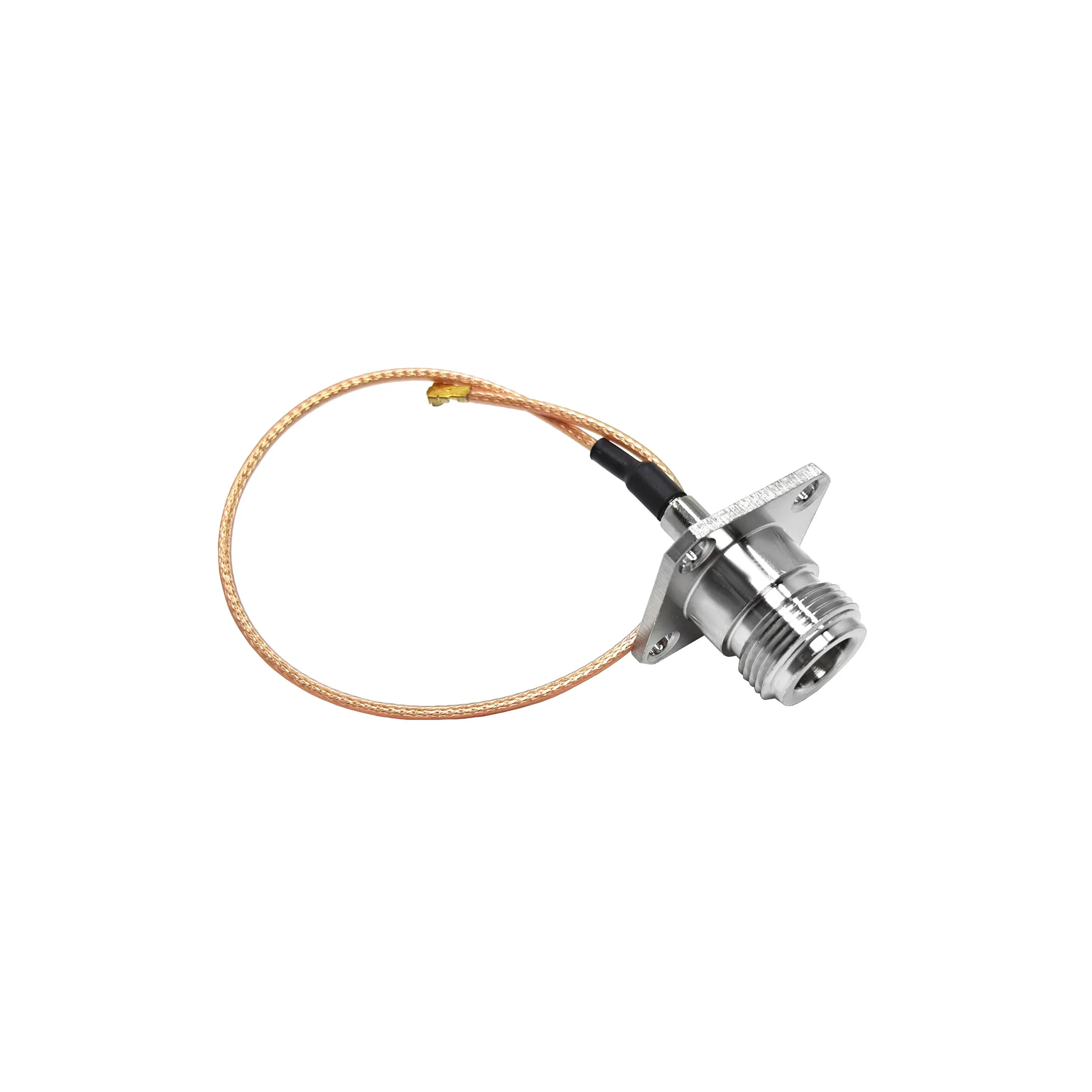
When procurement teams compare quotes for custom coaxial cable assemblies, the focus often lands on price and lead time. What gets underweighted — at least until a network audit reveals a problem — is how much signal performance depends on whether the cable assembly was actually specified for the application. This is the practical case for custom coaxial cable assemblies: not as a premium add-on, but as the more defensible procurement path when your system has specific frequency, routing, or environmental demands.
From a procurement standpoint, the core question isn't whether custom assemblies are better in the abstract. It's whether the standard product in your vendor catalog will hold impedance, insertion loss, and mechanical integrity under your actual operating conditions. For telecom infrastructure, industrial automation, and defense electronics, it often won't.
Why Off-the-Shelf Assemblies Create Signal Risk
Standard catalog RF cable assemblies are built to common length increments, standard connector combinations, and generic jacket specifications. For bench testing, this often works. The problems surface when the system has non-standard routing requirements, operates above 3 GHz, or is deployed in an environment the generic jacket wasn't designed to handle.
The signal-level consequences include elevated VSWR, higher insertion loss than the link budget allows, and passive intermodulation from connector interfaces that weren't matched to the cable's outer conductor geometry. These degrade the signal path in ways that are difficult to diagnose after deployment, but straightforward to prevent at the specification stage.
What Custom Coaxial Cable Assemblies Actually Fix
Custom coaxial cable assemblies directly address the three primary signal quality mechanisms that generic assemblies can't reliably guarantee:
- Impedance consistency: The 50-ohm characteristic impedance depends on precise dimensional control of the inner conductor and dielectric. Custom coaxial cable assemblies specify the cable type, dielectric material, and connector-to-cable interface geometry explicitly — controlling production variation that causes impedance discontinuities rather than accepting it.
- Insertion loss optimization: Exact-length specification eliminates excess cable coiled in enclosures. Excess cable adds insertion loss directly, and at 3.5 GHz or above, even 0.3 dB matters to a 5G link budget.
- Connector interface matching: Connector gender, polarity, coupling mechanism, and body material need to match the mating interface and deployment environment. Under-specified RFQs regularly produce physically incompatible connectors, requiring re-order lead time and delaying system integration.
For applications using fakra cable assembly configurations in automotive telematics and V2X systems, the color-coded keying and impedance-matched interface make precise specification even more critical. The wrong FAKRA keying code produces a physical incompatibility that no electrical tuning can resolve at the system level.
Specifying Custom Coaxial Cable Assemblies: A Procurement Checklist
Whether you're working with cable assembly suppliers for a telecom deployment or qualifying a source for OEM production, the following parameters need to be confirmed before the purchase order is placed for custom coaxial cable assemblies:
- Cable type and impedance: 50-ohm vs. 75-ohm; cable family (LMR, RG, semi-rigid, or low-loss structured); nominal attenuation per meter at operating frequency
- Connector interface and gender: Interface type (SMA, N-type, BNC, FAKRA); male/female and standard/reverse polarity; coupling mechanism (screw, push-pull, bayonet)
- Assembly length: Exact length; tolerance band; phase-match requirement if supplying multiple assemblies for an array
- Jacket specification: Material (PE, PVC, LSZH, TPE); UV resistance; temperature operating range; resistance to oils or solvents for industrial environments
- Test requirements: Per-assembly insertion loss sweep; VSWR measurement frequency range; required test report format
- Documentation: Certificate of conformance; material compliance (RoHS/REACH for EU/North American buyers); country of origin; batch traceability marking
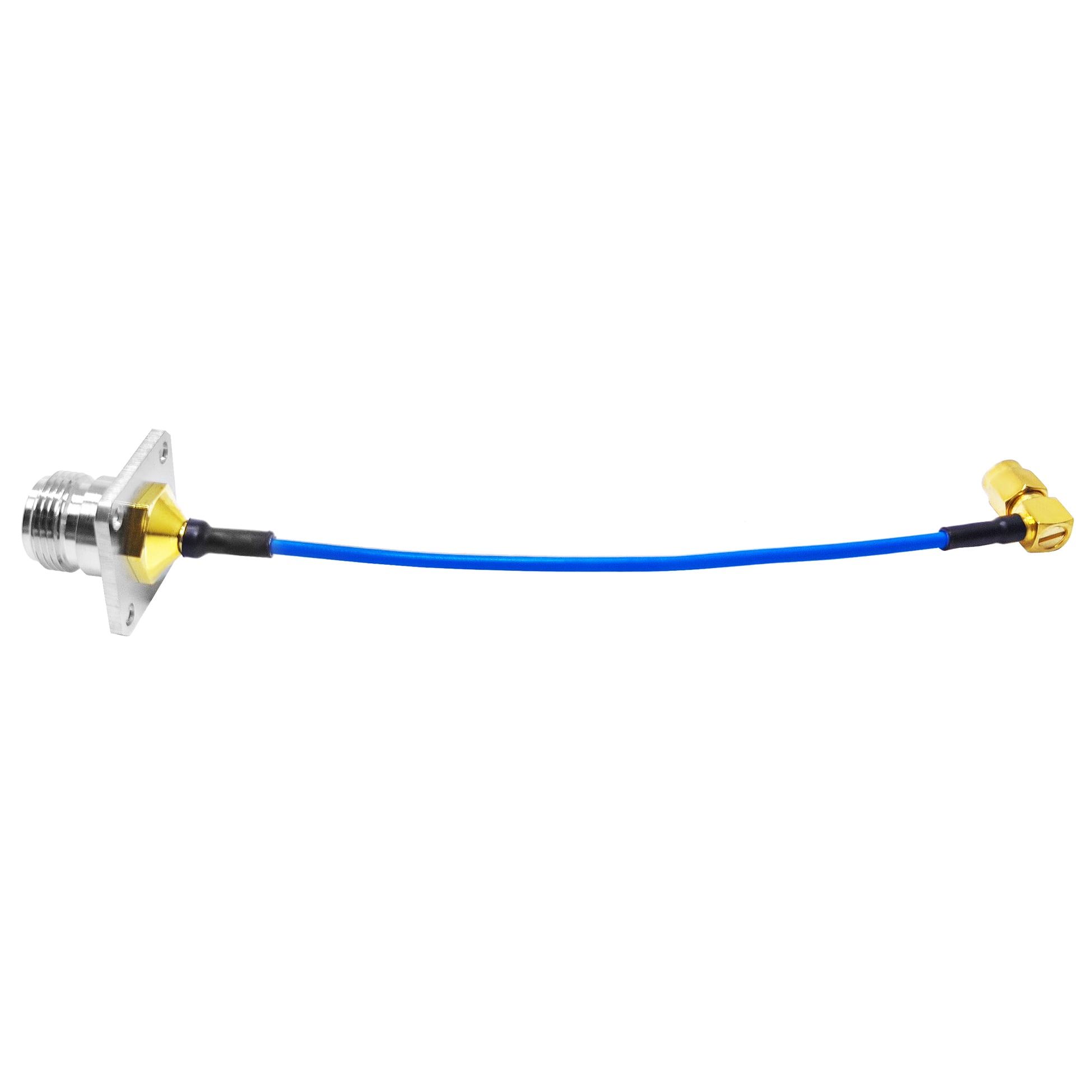
For a reference on pre-terminated, tested assemblies, the Worldpeak SS402 Pre-Terminated Cable Assembly demonstrates the pre-shipment electrical verification approach — swept insertion loss and VSWR data included per assembly. The Worldpeak RG196 50-Ohm Coaxial Cable Engineering Data & Selection Guide is a useful specification reference for understanding how cable electrical parameters connect to signal performance.
Comparing Cable Assembly Suppliers: What Quality Systems Indicate
Evaluating custom wire and cable sources is complicated because manufacturers present quality claims inconsistently. ISO 9001 certification covers the quality management process, not the product electrical specification. A supplier can hold ISO 9001 certification while producing assemblies with batch-to-batch plating variation that their sampling plan doesn't catch. What matters alongside certification is the actual incoming component inspection process, in-process dimensional controls, and per-assembly electrical testing capability.
For military procurement, MIL-DTL-17 applies to the coaxial cable and covers shielding effectiveness, dielectric requirements, and environmental stress testing. Suppliers serving defense integrators need documentation aligned to this standard, with traceability through component lot numbers. The completeness of a supplier's technical data package is typically a reliable indicator of their manufacturing process discipline.
Lead times for custom coaxial cable assemblies vary significantly by manufacturer. Factory-direct suppliers with in-house assembly capability can typically provide prototype samples within 7–14 days for standard interface combinations. Confirm sample lead time separately from production lead time, and clarify whether production pricing applies at the minimum MOQ or only at higher volumes.
Industry Applications: Where Custom Assemblies Deliver Signal Benefit
Telecom and wireless infrastructure: 5G feeders operating above 3.5 GHz need verified low insertion loss to hold link budget margins. Custom-length assemblies eliminate coiled excess cable, and VSWR-tested terminations prevent signal reflections that degrade sector coverage. Low-loss 50-ohm cable such as the LMR400 Low-Loss 50 Ohm Coaxial Cable is a common base for feeder assemblies where per-unit insertion loss control is a primary specification.
Industrial automation: Industrial environments introduce cable jacket degradation from machine oil, coolant, and solvent exposure. Custom coaxial cable assemblies with application-matched jacket materials and connector strain relief extend service life and prevent premature failures that create unplanned replacement cycles in factory wireless deployments.
Military and defense: Defense system integration requires documented shielding effectiveness, phase-match verification for phased array feeds, and materials traceability. The procurement cycle for defense-qualified custom coaxial cable assemblies includes first-article inspection and qualification testing against MIL standards — which means cable assembly suppliers need documentation capability that catalog distributors typically cannot provide.
MOQ, Sampling, and Acceptance Testing
Most OEM-oriented cable assembly manufacturers can accommodate prototype quantities of 5–20 units at the specification confirmation stage, with sample lead times of 7–14 business days for standard interfaces. MOQ for production pricing typically starts at 50–100 assemblies. Confirm this before progressing the design.
Acceptance testing for incoming custom coaxial cable assemblies should include a spot sample of insertion loss and VSWR measurements from each production lot using a VNA. Suppliers who include per-assembly swept test data with the shipment simplify incoming inspection and provide documentation for as-built records. Pull-strength testing and visual jacket inspection round out a practical procedure for infrastructure-grade assemblies.
For buyers qualifying new cable assembly suppliers, requesting test data alongside the sample batch — not just a datasheet — is the most reliable way to verify that the production process delivers what the specification requires. Pre-shipment test documentation closes the gap between datasheet claims and actual measured performance at relatively low cost to the supplier.