EN
EN

How to Verify Female RP SMA Connector Quality Before You Order
When evaluating a female rp sma connector for regulatory-sensitive or high-frequency applications, I look beyond the headline specifications. The datasheet tells you the rated frequency range and impedance value, but it does not tell you whether the plating thickness was controlled to spec, whether the center pin geometry will hold up under repeated mating cycles, or whether the supplier can produce the same result batch after batch. Reviewing incoming connector inspections over time has shown me that the documentation a supplier provides is itself a quality indicator—suppliers who invest in thorough test documentation tend to invest equally in manufacturing process control.
This checklist is for engineers and procurement specialists who need to verify female rp sma connector quality before committing to a production or project order. The items apply whether you are sourcing a straight female RP-SMA port connector, an adapter in rp sma male to sma female or rp sma female to sma male configuration, or an interface in sma male to rp sma female transition assemblies.
1. Confirm the RP-SMA Polarity Convention and Gender
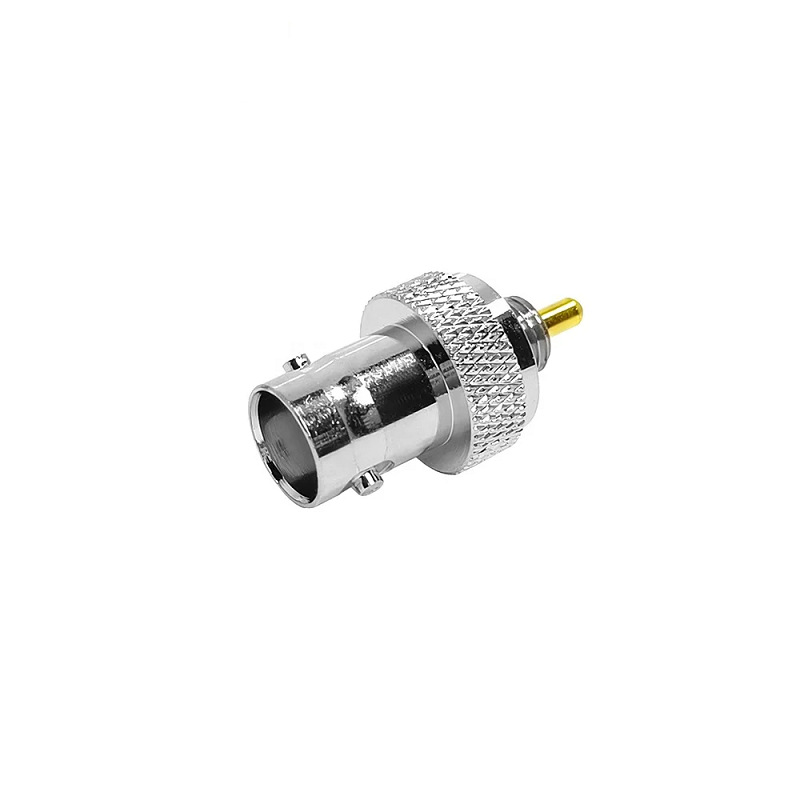
Before any electrical check, confirm that you have specified the correct RP-SMA gender. The RP-SMA standard reverses the center contact relative to standard SMA: the female RP-SMA connector carries a center pin where a standard SMA female would have a socket. Mixing standard SMA and RP-SMA in the same mating pair results in mechanical interference at the center contact, not a clean mismatch—physical damage is the likely outcome.
When ordering adapters such as an rp sma male to sma female transition, verify that the datasheet diagram matches your actual port configuration. Thread engagement on the outer coupling nut is shared between SMA and RP-SMA, so visual inspection of the housing alone will not catch a polarity error before installation.
2. Verify the Impedance Specification
The standard characteristic impedance for RP-SMA connectors is 50 ohms, consistent with the broader SMA interface family. Before accepting a shipment, confirm that the impedance value is explicitly stated in the datasheet, not implied by the connector family designation alone. A connector body machined to inadequate dimensional tolerances can deviate from 50 ohms at the connector interface even when assembled from standard-family components.
For applications above 6 GHz, ask whether impedance has been verified at frequency—a DC resistance check confirms conductor continuity but reveals nothing about the frequency-dependent impedance performance that actually matters for your signal path.
3. Check the VSWR Specification and Frequency Range
A quality female rp sma connector should achieve a VSWR below 1.3:1 across its rated frequency range. This threshold—roughly equivalent to a return loss of about 17 dB—indicates a well-controlled interface geometry. VSWR values above 1.5:1 at the rated upper frequency suggest that center contact geometry or coupling interface tolerances are not well controlled.
If the operating frequency is below 3 GHz, VSWR compliance is typically straightforward to achieve. If your application runs to 12 GHz or beyond on the SMA frequency ceiling of 18 GHz, request swept VSWR data covering the upper frequency range, not just a single-point measurement at a middle frequency. Roughly speaking, each VSWR unit above 1.0 represents an increasing fraction of signal reflected back toward the source—at 1.3:1, approximately 1.7% of incident power is reflected, which is a reasonable upper bound for a quality connector, though this estimate should be verified against your specific link budget rather than used as a guaranteed figure.
4. Inspect the Plating Material and Contact Surface
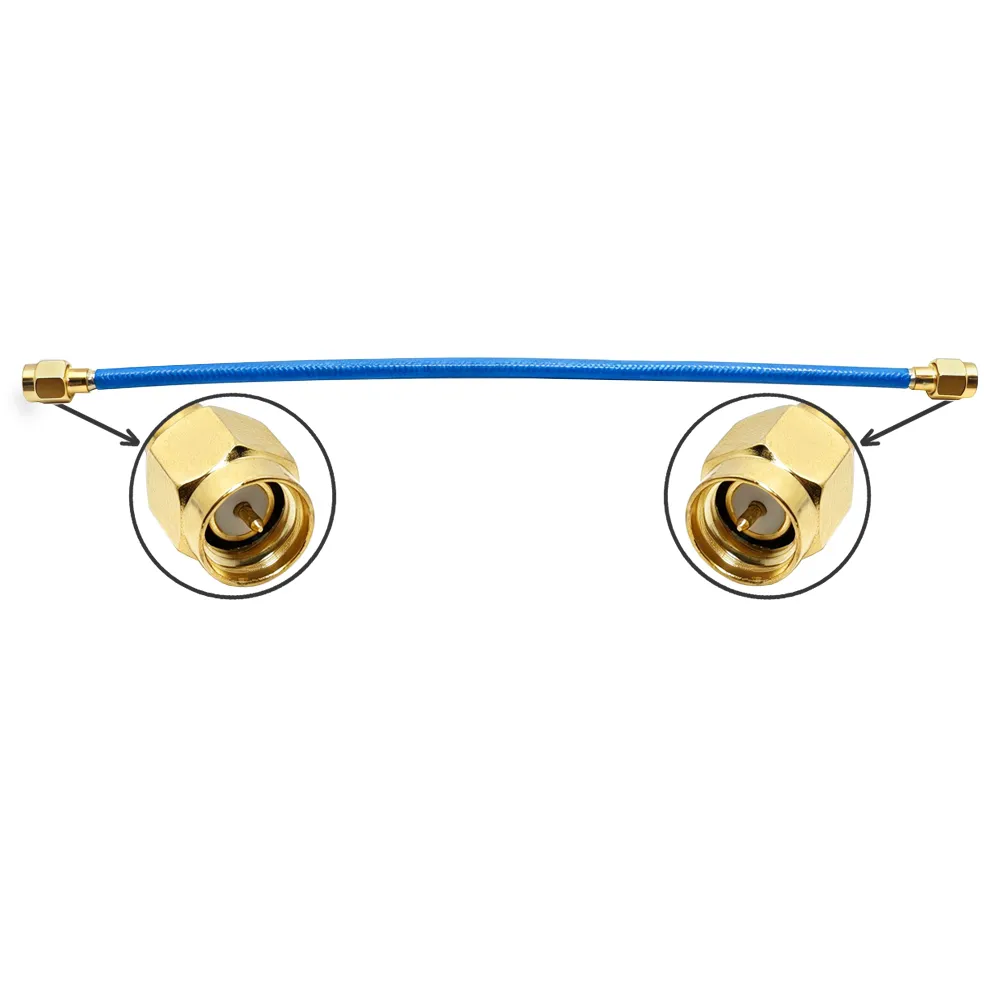
When I compare female RP-SMA connectors from different sources side by side, one of the first things I check before any electrical test is the center pin surface finish under magnification. A uniformly gold-plated center pin has a consistent warm yellow appearance; thin or irregular gold plating shows as patchy coverage, color variation, or visible base metal at the edges. That physical characteristic correlates with contact resistance consistency and resistance to corrosion once the parts are in service.
Gold plating provides superior corrosion resistance and maintains more consistent contact resistance across mating cycles compared to silver or nickel plating. If your installation environment stays below moderate humidity and the connector sees infrequent mating, a silver-plated option may be acceptable; once either humidity or mating cycle count consistently exceeds moderate levels, gold plating is the specification that prevents premature contact resistance drift.
5. Evaluate the Environmental Protection Rating
For applications in outdoor, industrial automation, or security infrastructure environments, confirm the IP rating of the connector housing and—critically—verify that the stated rating applies when the connector is mated, not only when the port is sealed with a dust cap. An IP67 rating on the housing tells you little if the mating interface lacks a sealing gasket or if the cable termination at the back of the connector body allows moisture ingress along the conductor path.
The RF-PRO-SMA-50M SMA Connector from Worldpeak, rated IP67 with a gold-plated brass body at 50Ω across DC to 18 GHz and compliant with RoHS, specifies both the environmental protection level and the material compliance in the product designation—which simplifies incoming inspection cross-check against the order specification.
6. Request Per-Unit Electrical Test Data
I used to treat connector test reports as an administrative requirement that suppliers included because procurement asked for it. That view shifted when incomplete insertion loss test coverage turned out to be the leading indicator of inconsistent dielectric quality that only appeared months into a deployment at frequencies above 10 GHz. Test report completeness is now how I assess manufacturing process control discipline at a supplier.
A supplier who provides swept insertion loss and VSWR data for each assembly—not just representative lot samples—has the measurement infrastructure to catch production variance before it ships. Ask specifically whether the test data covers the upper end of the rated frequency range, not only a mid-band spot frequency. Per-assembly swept data is more informative than a single lot-level acceptance test.
7. Confirm Traceability Documentation
For procurement teams operating under OEM quality requirements or working in medical, rail, or defense-adjacent applications, traceability documentation—connector family designation, material composition, production batch, plating specification, and compliance declarations—should arrive as part of standard delivery documentation, not as a special request.
The absence of traceability documentation in a standard shipment package is itself a signal. Suppliers with controlled manufacturing processes maintain the records needed to reconstruct production history for any delivered component. Suppliers without those controls cannot provide this documentation because the underlying process infrastructure does not exist.
8. Verify RoHS and Compliance Status
For exports to European Union markets or supply chains that include OEM customers with material restriction audit requirements, RoHS compliance documentation should be explicit and available on request, not inferred from the product designation. Confirm that the declaration covers the connector body material and plating composition, not only the outer packaging or assembly.
For applications involving precision-machined RF connector bodies in stainless steel—such as the SS304 body construction used in the RFX-Custom-01 Precision Machined RF Connector—verify that the RoHS declaration extends to the full assembly including all plated components.
Applying This Checklist to Your Next RFQ
Before placing an order for a female rp sma connector—whether for a direct panel mount, an rp sma female to sma male adapter, or an interface in an sma male to rp sma female transition assembly—ask yourself: does the supplier's product documentation allow you to verify each item on this list without a follow-up request? A supplier who anticipates these questions in their standard documentation is more likely to deliver consistent quality; a supplier who requires repeated follow-up to produce basic specification and test data is showing you what your incoming inspection experience will look like.
Choosing a female rp sma connector without verifying the compliance documentation trail creates a qualification gap that may not surface until a field audit or incident review. Working through this checklist at the sourcing stage is consistently lower cost than addressing specification gaps after delivery.