EN
EN

MMCX to SMA Adapter: Datasheet Spec Comparison
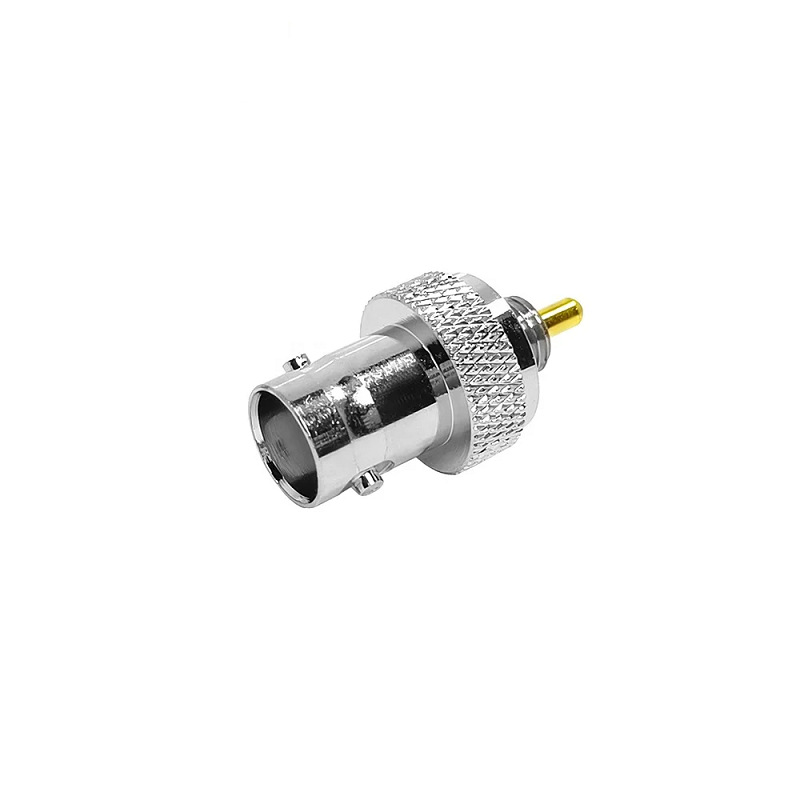
When an MMCX-equipped wireless module must connect to SMA-based test equipment, or a compact IoT radio needs to reach a 50Ω bench instrument, an mmcx sma adapter becomes the critical passive link. Selecting the right mmcx sma adapter means comparing the actual datasheet parameters of each connector family, not just confirming that both carry 50Ω impedance.
Below is a parameter-by-parameter comparison of MMCX and SMA connectors, followed by an explanation of the electrical constraints that arise when they are combined, and a practical checklist for engineering buyers procuring RF adapters in volume.
MMCX vs. SMA: Side-by-Side Spec Comparison
MMCX and SMA are both 50Ω coaxial interfaces. Their differences in frequency rating, coupling mechanism, power capacity, and thermal range define where each is appropriate and what constraints apply when bridged by an mmcx sma adapter.
| Parameter | MMCX | SMA (Standard) |
|---|---|---|
| Impedance | 50Ω nominal | 50Ω nominal |
| Frequency Range | DC–6 GHz (standard); up to 18 GHz (high-grade) | DC–18 GHz; up to 34 GHz (extended range) |
| Coupling Mechanism | Snap-on (snap-lock) | Threaded (MIL-STD-348) |
| Operating Temperature | –40°C to +90°C | –65°C to +165°C (PTFE insulator) |
| Power Handling | Limited; not rated for high-power RF | 75 W @ 10 GHz @ 25°C (continuous) |
| Mating Cycles (typical) | ~500 (snap mechanism) | 500 min (per MIL-STD-348 derivatives) |
| Insertion Loss (connector) | Low at DC–3 GHz; increases above 6 GHz | 0.06 × √f(GHz) dB max per interface |
| Body Form Factor | Ultraminiature (smallest RF coaxial interface) | Sub-miniature (larger than MMCX) |

One practical rule for any mmcx sma adapter application: the adapter's effective frequency limit is set by the lower-rated interface. Even if the SMA side is rated to 18 GHz, a standard-grade MMCX body caps usable performance at 6 GHz. High-grade MMCX parts rated to 18 GHz are available but must be explicitly specified. Running a standard-grade MMCX body above 6 GHz produces measurable VSWR degradation that affects system performance.
Common Adapter Configurations and Gender Selection
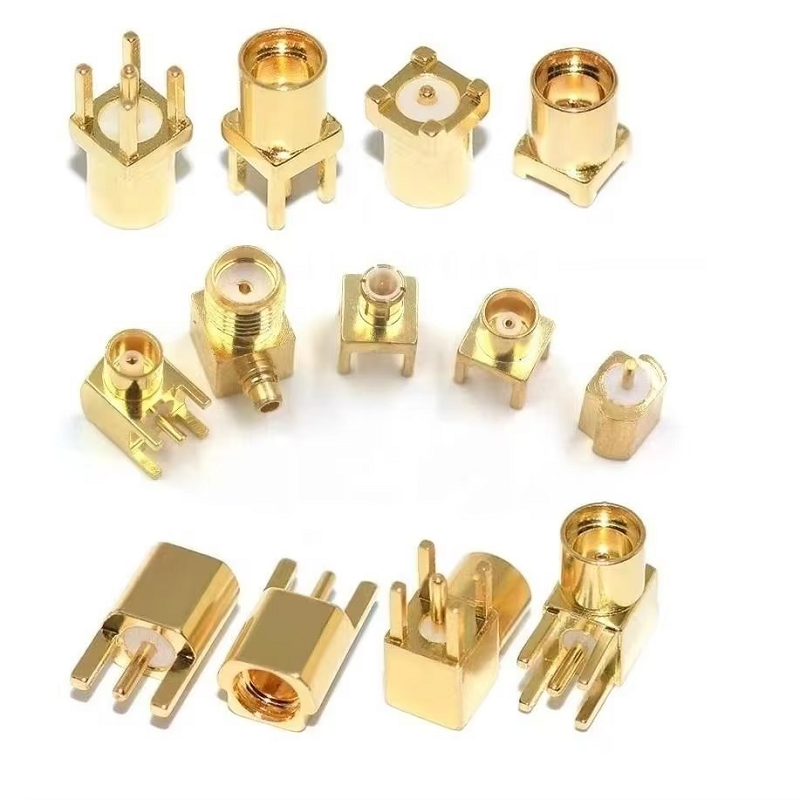
A sma to mmcx adapter is fully defined by four attributes: MMCX gender, SMA gender, orientation (straight or right-angle), and whether the SMA side uses standard or reverse-polarity (RP-SMA) threading. Common configurations in RF system integration work include:
- MMCX Male to SMA Female (straight): the most widely stocked sma to mmcx adapter; used when connecting an MMCX-pigtailed module to an SMA cable or panel port.
- MMCX Female to SMA Male (straight): used when the system has an MMCX female port that needs connection to an SMA male cable end.
- MMCX Male to SMA Male (back-to-back): adds two mating interfaces and cumulative insertion loss; bridges two SMA female ports.
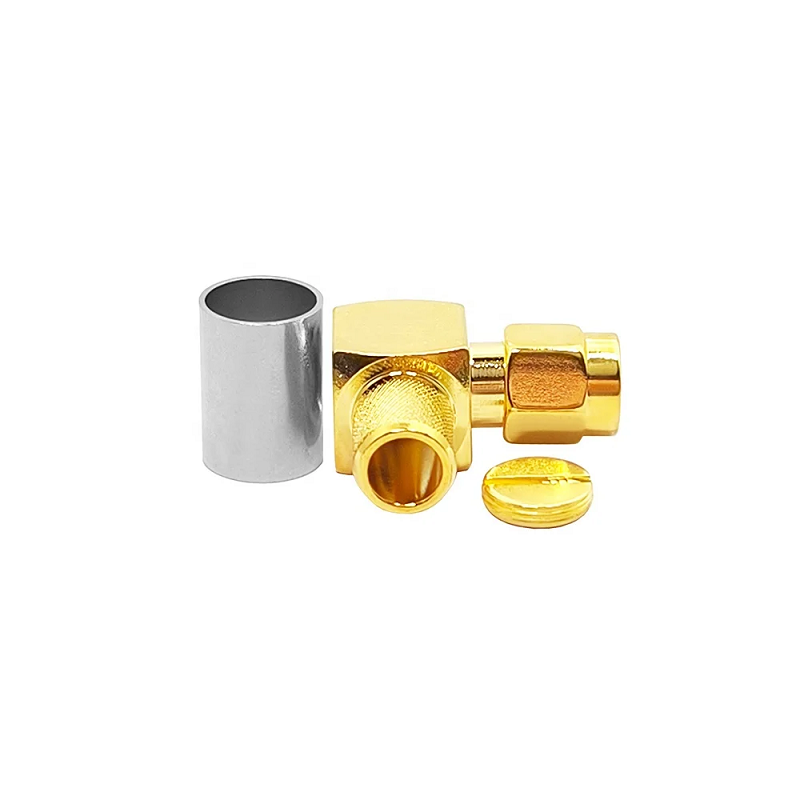
- Right-angle MMCX to SMA: suited for space-constrained enclosures where a straight adapter body creates mechanical interference with adjacent components.
Within the SMA-only family, a sma male to male adapter connects two SMA female ports without interface conversion. That configuration appears in laboratory cable chain extensions and rack-panel patching. A sma to sma adapter serves within-family connections, carrying no interface conversion penalty since both sides share the same frequency and power ratings. Neither a sma male to male adapter nor a sma to sma adapter should be substituted for an MMCX-to-SMA cross-series adapter when interface conversion is the actual requirement.
Gender and polarity misspecification accounts for a large share of procurement delays in adapter orders. Stating MMCX Male or Female and Standard SMA versus RP-SMA explicitly before ordering eliminates the integration-phase mismatch failures that require reorder lead time.
Frequency and Power Constraints
For applications at 2.4 GHz, GPS L1 (1.575 GHz), or sub-3 GHz cellular bands, a standard-grade mmcx sma adapter introduces negligible insertion loss. The constraints become engineering-relevant above 3 GHz.
Insertion loss accumulates across both interfaces in an adapter. The SMA formula is 0.06 × √f(GHz) dB per interface, giving approximately 0.15 dB per SMA connector at 6 GHz. A well-manufactured mmcx sma adapter should add less than 0.5 dB total at 6 GHz; the actual value must be confirmed from measured data, not assumed from single-connector specs. Many catalog adapters do not publish per-frequency insertion loss curves, creating real link budget uncertainty for buyers operating near the MMCX frequency ceiling.
Power handling is the more critical constraint for transmit-side applications. SMA supports 75 W continuous at 10 GHz and 25°C. MMCX snap-on interfaces carry substantially lower ratings. Above approximately 1–2 W continuous, the MMCX snap mechanism becomes the thermally and mechanically limiting element in the chain. Buyers specifying an mmcx sma adapter for any amplifier output application need the MMCX continuous power rating confirmed explicitly from the supplier before finalizing the design.
Quality Standards and Inspection Criteria
The parameters that distinguish a precision adapter from a commodity version are interface dimensional tolerances per MIL-STD-348, contact plating thickness, dielectric material, and body alloy. None of these appear in a product photograph, and they rarely surface in a bullet-point specification sheet.
Worldpeak's RF connector range includes precision-machined cross-series adapters with published frequency ratings, material specifications, and compliance documentation. The RFX-Custom-01 Precision Machined RF Connector (SMA-Male to MCX-Female, 0–6 GHz, SS304 Body, RoHS/CE) is a representative example: stainless steel SS304 body for corrosion resistance in demanding environments, a confirmed frequency ceiling of 6 GHz, and RoHS/CE compliance available for European export chains.

Verification parameters for any adapter candidate:
- Insertion loss per frequency: request measured data at 1 GHz, 3 GHz, and the rated upper frequency limit, not a single DC or low-frequency value.
- VSWR curve: VSWR through an adapter transition compounds with reflections elsewhere in the chain; confirm at the actual operating frequency.
- Interface dimensional conformance: SMA interfaces must meet MIL-STD-348 or IEC 61169-15; non-conforming bodies damage mating connector ports over repeated use.
- Contact plating: gold-plated center contacts give lower contact resistance and better corrosion resistance than nickel-only; confirm before volume ordering.
- Body material: brass suits indoor applications; stainless steel is appropriate for outdoor or humidity-exposed environments.
- Compliance documents: RoHS/REACH and CE declarations must be obtained before procurement for EU-bound supply chains.
B2B Procurement Checklist: Seven Parameters to Confirm
Before placing a volume order for any mmcx sma adapter, confirm these seven parameters in the supplier's datasheet or pre-sales response:
- Rated frequency range: does the adapter's upper frequency limit cover the full application band, measured for the complete unit?
- Gender and polarity: specify MMCX Male or Female, Standard SMA or RP-SMA. Reverse-polarity SMA will not mate with standard SMA.
- Impedance continuity: 50Ω through the full adapter transition, not just at each connector end.
- Maximum continuous power: confirm the CW power rating at operating frequency, particularly important for any transmit-side application.
- Measured insertion loss and VSWR: per-frequency S-parameter or VSWR data, not a single-temperature datasheet figure.
- Body and plating material: matched to installation environment corrosion, temperature, and mating cycle requirements.
- Compliance documentation: RoHS, REACH, CE, and country-of-origin as required by the destination supply chain.
Summary
Comparing MMCX and SMA datasheets reveals two 50Ω interfaces with compatible impedance but different frequency ceilings, coupling mechanisms, power ratings, and temperature ranges. A correctly specified mmcx sma adapter bridges these differences reliably, provided it is selected against the full parameter set and not just the interface name. The primary B2B procurement risk in adapter sourcing is specification incompleteness: wrong gender, unconfirmed frequency limit, undisclosed power ceiling, or missing compliance documentation. The seven-parameter checklist above converts the datasheet comparison into a practical procurement action.