EN
EN

Pl259 To BNC Adapter: Video and RF Conversion Guide
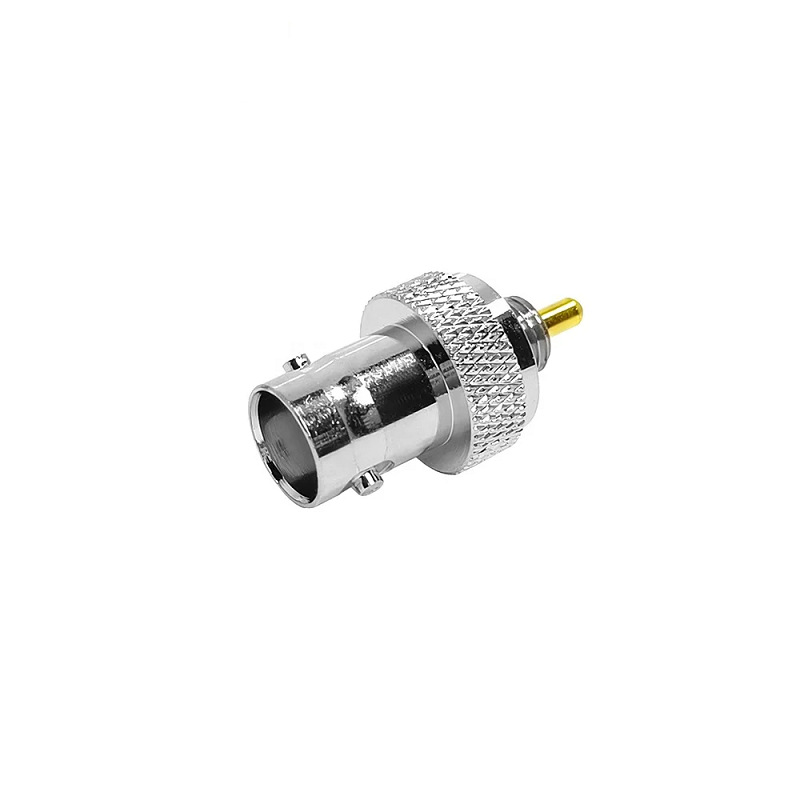
Working with mixed-interface RF systems means dealing with connector transitions that, on paper, look straightforward. A pl259 to bnc adapter sits at one of the most common of those transitions — bridging the older UHF/PL259 interface that still dominates HF radio and broadcast legacy installations with the faster-locking BNC interface found on test equipment, security cameras, and precision measurement gear. If you are evaluating these adapters for a B2B procurement or system integration project, understanding what the interface transition actually does to your signal — and what to check before you order in volume — makes a difference in whether the system performs as expected in the field.
Understanding the PL259 and BNC Interface Pair
The PL-259, also called the UHF connector, was designed in the 1930s when "ultra high frequency" referred to what we now call HF and low VHF. Despite the name, the interface has a practical upper frequency limit of around 100 MHz — and for applications where signal integrity matters, it performs most reliably below 30 MHz. The connector does not maintain a constant 50-ohm characteristic impedance along its length, which is the fundamental reason its usable frequency ceiling is lower than more recent interface families.
BNC, by contrast, maintains consistent characteristic impedance and is available in two variants: 50-ohm for RF, data, and instrumentation applications (rated to 4 GHz), and 75-ohm for video applications including HD video and broadcast distribution (rated to 2 GHz, with extended designs reaching 12 GHz for 12G-SDI). When specifying a pl259 to bnc adapter, clarifying which BNC impedance you need is not optional — physically, 50-ohm and 75-ohm BNC connectors can mate, but the impedance discontinuity will introduce reflections that degrade signal integrity in any frequency-sensitive application.
Common Conversion Scenarios That Drive Demand
In practice, the need for a pl259 to bnc conversion typically appears in a few recurring system integration situations. Legacy HF transceivers and amateur radio equipment with SO-239 sockets need to interface with modern portable antennas, feed lines, or test setups that terminate in BNC. Security and CCTV installations sometimes require bridging between older UHF-terminated backbone cabling and newer BNC-terminated cameras or recorders. Field test engineers connecting calibrated instruments to antenna systems also encounter this transition frequently, because bench instruments almost universally use BNC while installed antenna ports often remain UHF.
Beyond the direct pl259 to bnc conversion, related transitions come up in the same procurement context. A triax to bnc adapter addresses a different but adjacent problem: triax connectors provide a third conductor for shielding or guard ring configurations in precision measurement and camera signal transport, and converting to standard BNC is sometimes necessary when routing signals through a section of the system that lacks triax infrastructure. Similarly, a mini bnc to bnc adapter becomes necessary where compact equipment — often in broadcast or rack-mounted instrumentation environments — uses the smaller Mini-BNC footprint but the broader system uses standard BNC interfaces. Sourcing each of these as an independent line item rather than as part of a coordinated adapter selection strategy tends to surface specification errors during integration rather than before.
Frequency and Impedance Constraints in Mixed-Interface Systems
The frequency ceiling introduced by a PL-259 interface does not disappear when you add a conversion adapter — it remains the limiting constraint of the combined assembly. If you are building a test measurement chain rated to 500 MHz and introduce a PL259 to BNC adapter at any point in that chain, the PL259 side becomes the system's frequency bottleneck. That constraint means the adapter should only be used in paths where the signal frequency stays well below 100 MHz, or where the performance degradation above that point is acceptable for the application.
Impedance matching is the second parameter that requires careful evaluation. A 50-ohm BNC device connected through an adapter to a 75-ohm BNC cable introduces a mismatch at the junction. The VSWR resulting from a 50Ω/75Ω mismatch is approximately 1.5:1, which translates to a return loss of around 14 dB — acceptable for rough field testing but problematic in any application where signal integrity, measurement accuracy, or link budget margins are tight. Specifying the correct impedance variant of BNC on both sides of the adapter is the simplest way to eliminate this source of degradation. Experienced procurement teams evaluating RF adapters for B2B supply tend to shift from single-parameter evaluation (just checking frequency rating) toward a multi-constraint review that covers impedance, insertion loss, VSWR, and mechanical durability together.
Quality Standards and Verification Methods
For a passive two-port device like an adapter, the electrical specifications that matter most are insertion loss, VSWR across the operating frequency range, and RF leakage. A well-manufactured pl259 to bnc adapter in a 50-ohm system should contribute less than 0.3 dB insertion loss and maintain VSWR below 1.3:1 across its rated frequency range. Mechanical factors — body material, plating type, thread quality on the PL259 side, and the bayonet lock engagement on the BNC side — determine whether these electrical specifications hold up after repeated connection cycles and in field environments.
Plating selection is a quality differentiator that is easy to overlook in a price-led procurement. Gold-plated center contacts offer superior corrosion resistance and low contact resistance, relevant for low-signal applications or installations in humid or coastal environments. Nickel plating provides adequate corrosion resistance for indoor and controlled environments at lower cost. Silver plating delivers low contact resistance but is susceptible to tarnishing in the presence of sulfur-containing atmospheres. For a supplier to confirm plating specifications reliably, they need to maintain production records at the component level, not just apply a generic datasheet claim. Pre-shipment electrical testing with swept insertion loss and return loss data provides independent verification that each production batch meets specification — this type of test data is increasingly requested in B2B procurement for quality-critical applications.
Suppliers covering the full RF connector interface family across SMA, N-type, BNC, TNC, and UHF provide a logistical advantage when sourcing mixed-interface adapter sets: specification consistency and single-point technical accountability. In a multi-interface adapter procurement, having pre-sales technical support available to review application specifications before order placement reduces the risk of impedance, gender, or frequency mismatches reaching the integration stage.
B2B Procurement Parameter Checklist for RF Adapters
When qualifying a pl259 to bnc adapter for B2B supply, the following parameters should be confirmed before finalizing supplier selection:
- Impedance: 50Ω for RF, instrumentation, and data applications; 75Ω for video and broadcast. Confirm both sides match your system impedance — physically mating 50Ω to 75Ω BNC is possible but creates measurable signal degradation.
- Frequency rating: Confirm the adapter's rated frequency range is compatible with the system operating frequency. PL259 interface limits practical use to below 100 MHz in most applications.
- Gender configuration: PL259 (UHF) male or female; BNC male or female. Mismatched gender is one of the most common integration errors when ordering adapters without checking the existing terminations on both ends of the connection.
- Insertion loss and VSWR: Request supplier test data or datasheet values across the intended frequency range. A well-specified adapter should show insertion loss below 0.3 dB and VSWR below 1.3:1 at the operating frequency.
- Body material and plating: Specify brass body with appropriate plating (gold, nickel, or silver) based on environmental exposure and electrical performance requirements.
- Mating cycles: BNC interfaces are typically rated for a minimum of 500 mating cycles. For high-rotation test environment use, confirm this rating explicitly.
- Compliance documentation: For supply into EU or other regulated markets, confirm RoHS and REACH material compliance documentation availability.
This checklist translates directly to evaluating a triax to bnc adapter or a mini bnc to bnc adapter: impedance, frequency, gender, and plating remain the core parameters regardless of the interface combination. The most practical approach to a mixed-adapter procurement is to treat all adapter specifications in the same system as a single coordinated review rather than sourcing each transition separately from different suppliers. Consolidating multi-interface RF adapter procurement with a qualified single supplier simplifies incoming inspection and ensures consistent specification accountability across the full adapter set.