EN
EN

RG-58 Cable: Specifications, Uses and Compatibility
Choosing RG 58 is less about finding a familiar coaxial cable name and more about matching a 50-ohm signal path to the frequency, length, environment, and routing constraints of the job. In RF work, a cable that looks interchangeable on a bench can become the source of loss, reflections, or mechanical damage after installation. This guide explains what RG 58 construction means, where it fits, and when another cable is the safer choice.
Start with the construction, not the label
A conventional RG 58 cable is a flexible 50-ohm coaxial cable built around a center conductor, dielectric insulation, a conductive shield, and an outer jacket. The center conductor carries the RF signal. The dielectric holds the conductor at a controlled distance from the shield, which is a key part of maintaining characteristic impedance. The shield provides the return path and reduces susceptibility to external interference; the jacket protects the assembly during handling and service.
Those layers explain why two cables sold under a similar family name may not behave identically. Conductor material and strand count affect flexibility. Dielectric type influences velocity factor, diameter, and attenuation. Shield coverage and shield construction affect leakage and noise rejection. Jacket compounds determine how well a cable tolerates abrasion, sunlight, moisture, temperature, or indoor routing rules. Treat RG 58 as a starting classification, then confirm the supplier’s actual datasheet before approving an RFQ.
What the 50-ohm impedance means
The defining electrical characteristic of RG 58 is nominal 50-ohm impedance. In a 50-ohm system, the cable, connectors, antenna feed, test equipment, and active RF ports should be selected as a matched chain. A mismatch can reflect some energy back toward the source, reducing available margin and making measured performance less predictable. For short, low-frequency leads, a mismatch may be less visible; as frequency and run length rise, it becomes harder to ignore.
This is the practical distinction from rg 59 coaxial cable, which is typically associated with 75-ohm video, broadcast, and certain data-distribution systems. Neither impedance is universally better. Use 50 ohms when the connected equipment is designed for 50 ohms; use 75 ohms when the complete system calls for 75 ohms. Do not substitute rg 59 coaxial cable for RG 58 simply because the diameters or connectors appear convenient.
Attenuation, frequency, and cable length
Attenuation is the signal loss that accumulates along a cable run. It rises with frequency and length, and it varies with construction. That is why an rg 58 u coaxial cable can be a sensible choice for a short flexible jumper yet a poor fit for a long run with a tight link budget. A relevant manufacturer listing describes one RG58 configuration as 50 ohms and about 4.95 mm in diameter, but that listing is not a universal rating for every RG 58 product.
Before ordering, ask four questions: What is the operating frequency? What is the maximum cable length? How much loss can the link budget accept? Does the installation require repeated flexing or only a static route? If loss over distance is the limiting factor, a larger low-loss feeder such as LMR400 may be more appropriate than RG 58, provided its size and bend requirements fit the route. If compact routing and flexibility matter more on a short connection, RG 58 may remain the practical selection.
Shielding and noise control
Shielding is not only a checkbox on a specification sheet. The effectiveness of an RG 58 cable shield depends on coverage, integrity, connector termination, and how the cable is routed near interference sources. A damaged braid, poorly installed connector, or crushed dielectric can undermine the performance expected from the cable design. Keep RF leads separated from strong noise sources where practical, and inspect the shield termination whenever a cable is reworked.
It is tempting to assume a higher-frequency project automatically needs the most expensive assembly. In reality, the determining factors are the complete frequency plan, loss budget, exposure, and mechanical constraints. A correctly specified RG 58 assembly can perform adequately in a controlled short-run application because the system limitation may be routing or connector quality rather than cable category alone.
Compatibility checklist for procurement
- Impedance: Confirm that every connected RF interface is 50 ohms before specifying RG 58.
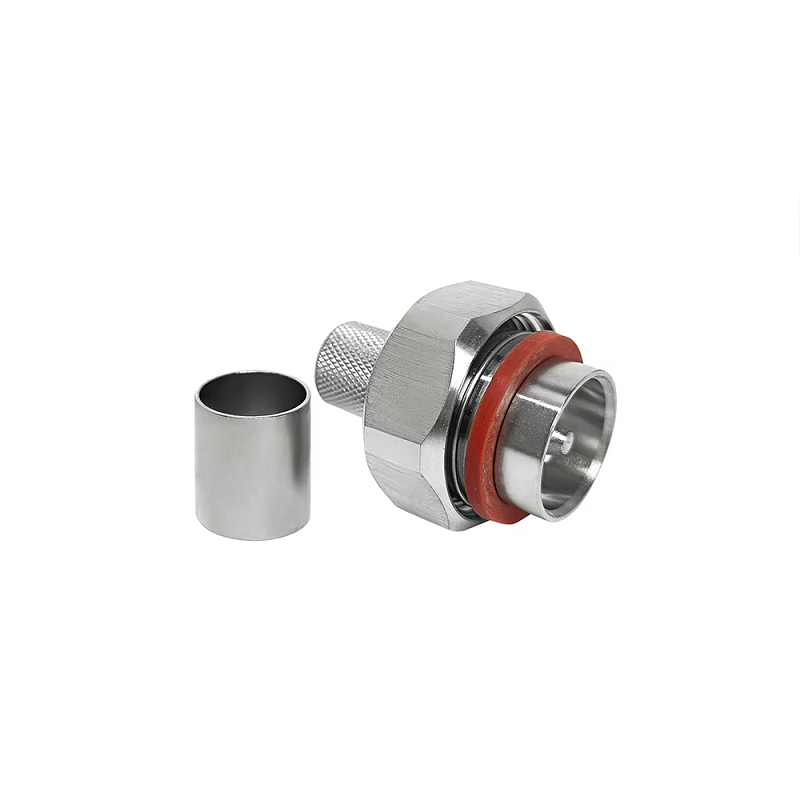
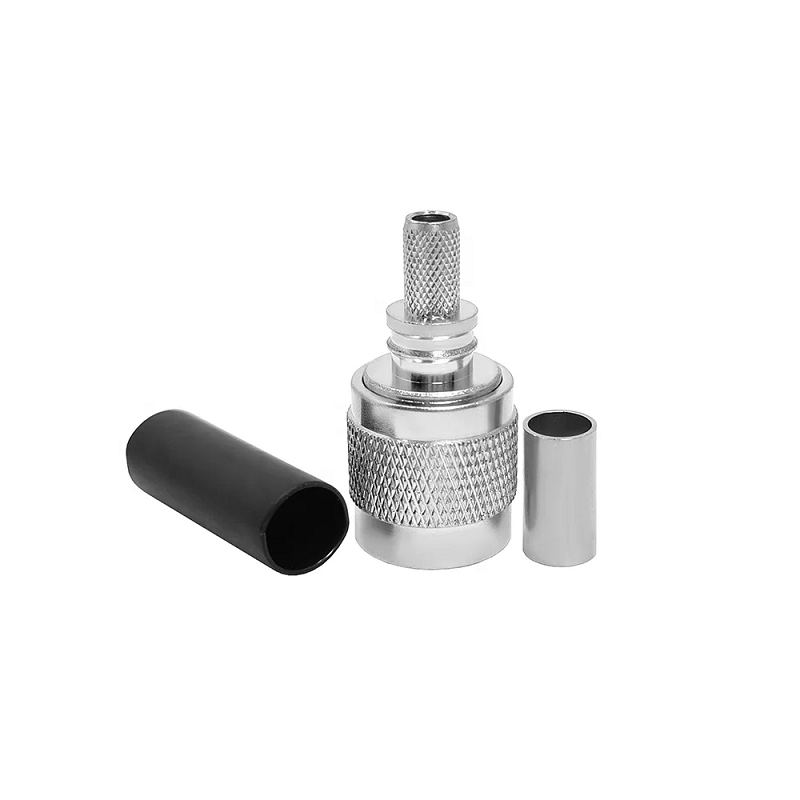
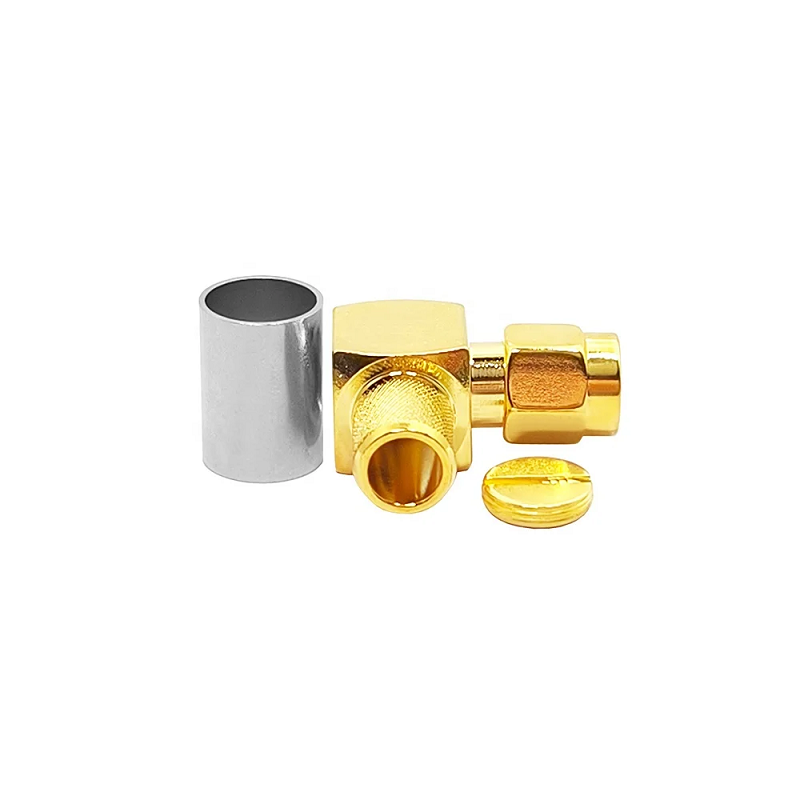
- Connector interface: Verify connector series, gender, termination method, and any adapter losses. The connector must match both the port and the cable diameter.
- Frequency and loss: Compare published attenuation at the actual operating frequency, not only at a convenient low-frequency test point.
- Environment: Check jacket suitability for indoor, outdoor, UV, moisture, temperature, and chemical exposure.
- Mechanical route: Confirm cable diameter, minimum bend radius, strain relief, and whether the cable will be repeatedly flexed.
- Traceability: Request the applicable cable and assembly documentation for the supplied configuration rather than relying on a generic family description.
Installation: bend radius is an electrical issue too
Do not force RG 58 around a sharp corner. Tight bends can deform the dielectric, disturb conductor-to-shield spacing, and create a localized impedance discontinuity. Search results for different RG58 designs show that minimum bend guidance can vary substantially, so the relevant number is the cable manufacturer’s value for the exact part number. Route the cable with a smooth curve, leave strain relief near connectors, and avoid pulling against a terminated interface.
During receiving inspection, damage may not be obvious while a cable is packaged. Uncoil an RG 58 cable gently and look for jacket whitening, cuts, flattened sections, or irregular bends. These observations do not replace electrical testing, but they can reveal handling damage before a cable is built into an enclosure or outdoor run. After installation, verify connector engagement and perform the appropriate system-level RF check.
Where Worldpeak RG58 options fit
For buyers who need a finished short connection rather than bulk cable, the CMS-confirmed Worldpeak RG58 Pre-Terminated Cable Assembly provides a product reference to evaluate against the connector, length, and routing requirements of the application. For a cable-specific reference, review the Worldpeak RG58 50-Ohm Coaxial Cable: Engineering Data & Selection Guide and confirm the exact supplied construction before purchase.
So what does this mean for a buyer? Choose RG 58 when a flexible 50-ohm coaxial link fits the required frequency, length, and environment. Move to a lower-loss or more rugged cable when the run is long, the loss budget is narrow, or outdoor exposure and repeated motion demand a different construction. That decision process is more reliable than selecting by cable name alone.