EN
EN

When Is N Type Coax Connector the Best Choice for Your RF System?
As an RF systems engineer who has worked on everything from cellular base station feeders to instrumentation setups, I've made connector selection decisions at nearly every frequency and power level across the mid-range RF spectrum. One question surfaces consistently across procurement teams, installers, and design engineers: when should you specify an n type coax connector instead of BNC, TNC, or SMA? The answer depends on a few parameters that are worth working through carefully, because getting the interface wrong costs time and money to fix after installation.
What Makes the N Type Connector the Industry Standard Interface in RF Systems
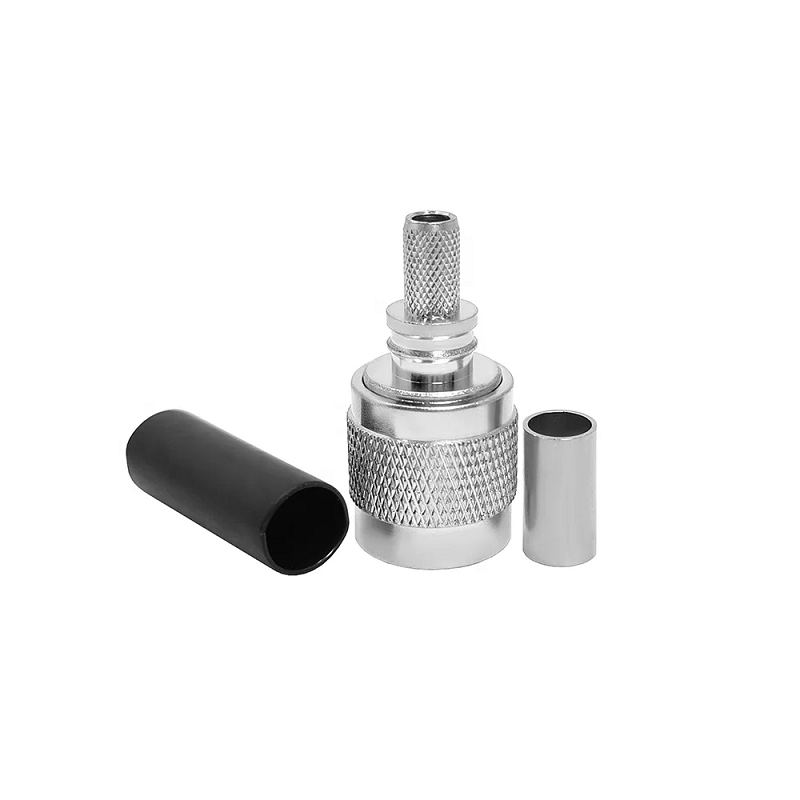
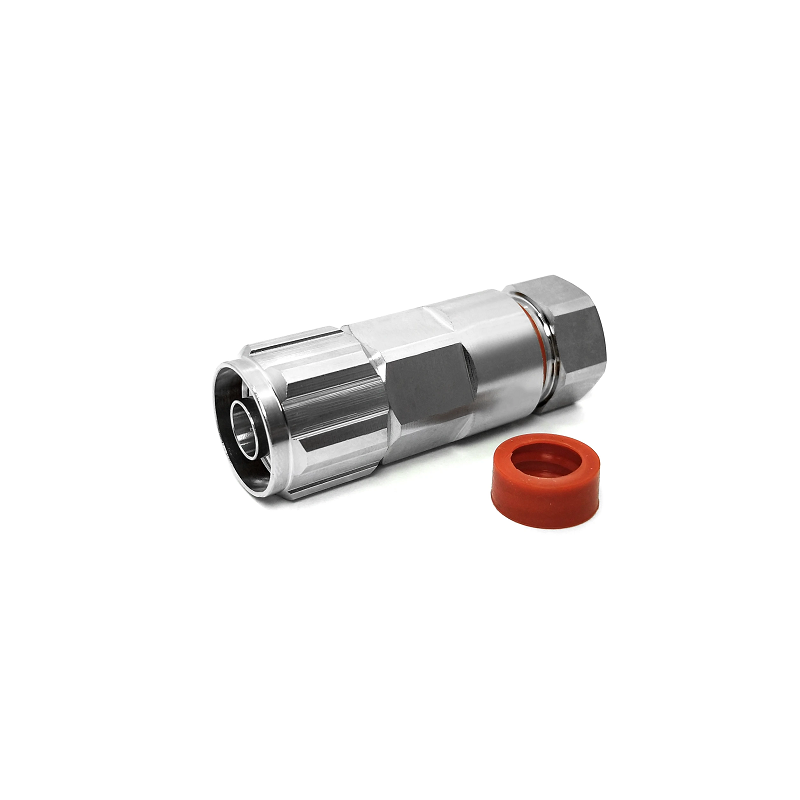
The n type coax connector is a threaded, weatherproof, medium-size RF interconnect that has served as a de facto standard interface in microwave and RF systems since the 1940s. Its design—50-ohm impedance standard, screw-coupled connection, and medium conductor geometry—supports reliable performance from DC through 11 GHz in standard configurations, with precision versions extending the usable range to 18 GHz for test and measurement applications.
What makes it a sustained industry standard rather than just a widely-stocked part is the combination of power handling and weather resistance at that frequency range. At 1 GHz, the N connector supports power ratings in the range of approximately 1,200 W—a figure that BNC and TNC connectors cannot approach at the same connector size. That combination sets it apart from interfaces that trade power handling for smaller form factor.
The connector also carries a 50-ohm characteristic impedance as the primary standard, though 75-ohm versions exist for broadcast and cable distribution applications. If your system is a 50-ohm RF chain—base station feeders, antenna mounts, test benches, or industrial automation RF links—an n type coax connector is the interface built for your operating environment.
N Type Connector Variants: Matching the Body Configuration to the Installation
I initially assumed the same N type connector selection approach applied equally to laboratory bench setups and outdoor antenna mounts. The distinction became clear when VSWR measurements on a rooftop installation showed a right-angle N connector adding measurable reflection at higher frequencies—a body configuration fine for indoor panel use was introducing a return loss increase when cable routing put mechanical stress on the connection body.
The four main N type body variants each serve a different installation role:
- N male (plug): Terminates onto the cable end; the primary cable-to-equipment connection in most RF chains.
- N female (jack): Typically the chassis-side or panel-side connector; accepts the male cable end at the equipment port.
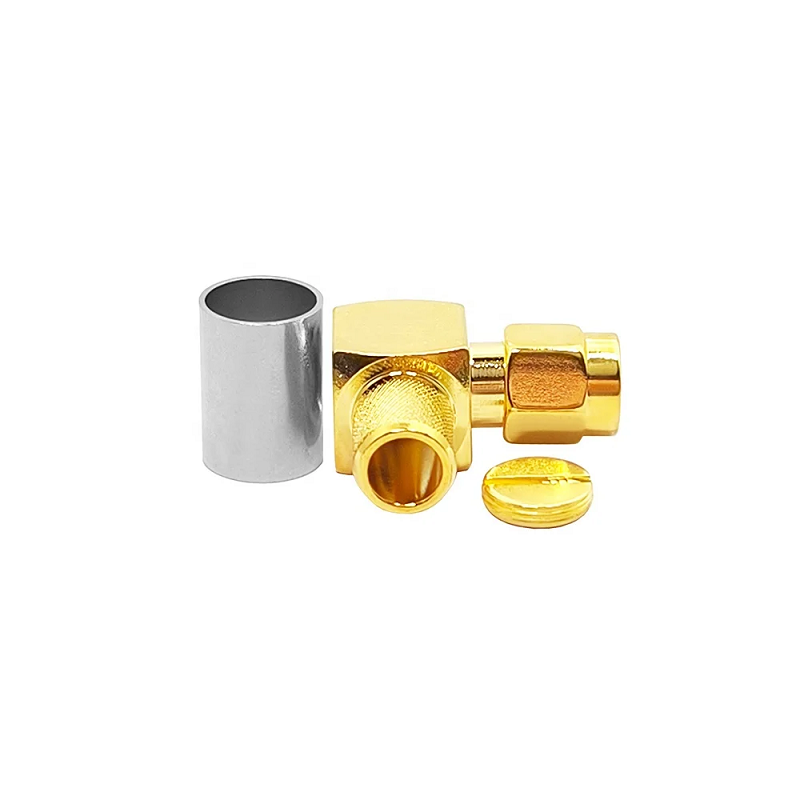
- Right-angle N type: Used where cable routing space is constrained; the VSWR specification rises to ≤ 1.5 in right-angle configuration versus ≤ 1.3 for the straight type—account for this difference when evaluating link budget at frequencies above 6 GHz.
- Panel-mount N type: Secures directly to enclosure walls; used extensively in outdoor enclosures and base station installations where the connector interface must remain accessible from the front panel while the cable routes internally.
Before choosing between these variants, ask yourself: how many mating cycles will this connection see over its service life, and what mechanical stress will the cable exert on the connector body? If the answer involves significant vibration or repeated handling, a straight body with adequate strain relief will outlast a right-angle configuration that absorbs mechanical load through the connector interface itself.
When to Choose N Type Over TNC and BNC
There is no universally best n connector cable termination—the right choice depends on your frequency requirement, power level, and installation environment. That said, the decision between N type, TNC, and BNC maps fairly cleanly to a set of criteria:
| Criterion | N Type | TNC | BNC |
|---|---|---|---|
| Frequency range | DC – 11 GHz (up to 18 GHz precision) | DC – 11 GHz | DC – 4 GHz |
| Power handling | High (~1,200 W at 1 GHz) | Moderate | Low |
| Connection type | Threaded (secure, vibration-resistant) | Threaded | Bayonet (quarter-turn) |
| Weather resistance | Weatherproof | Weatherproof | Not weatherproof |
| Form factor | Medium | Smaller (similar to SMA) | Medium |
If your primary constraint is power level or outdoor installation, N type should carry the most weight in your selection. TNC offers a comparable frequency ceiling with a smaller form factor, making it appropriate when connector density or weight is the binding constraint and power levels are moderate. BNC is the right choice when connection speed matters more than weatherproofing—quick-connect test bench setups, video signal chains, lower-frequency instrumentation.
Where an n type attenuator is part of the signal chain, the same connector body selection logic applies: a fixed attenuator with N type interfaces integrates cleanly into a base station or antenna test setup without requiring adapters that introduce additional reflection and insertion loss at each interface boundary.
High-Power and Outdoor Applications: Where N Type Delivers the Most Value
Roughly speaking, each connector interface in an outdoor feeder run contributes somewhere in the range of 0.1 to 0.3 dB of insertion loss at 6 GHz—that is a ballpark estimate, not a number to use in a link budget without measuring your specific assembly. The number that matters more in outdoor applications is how that insertion loss holds up after 12 to 18 months of thermal cycling, humidity exposure, and UV loading on the connector interface.
For a long time I treated high-grade plating and fully weatherproofed body connectors as unnecessary cost overhead for outdoor enclosures in moderate climate zones. My thinking shifted when a corrosion audit on a humid coastal installation showed surface degradation on improperly sealed connector interfaces had elevated contact resistance beyond the original specification. The connector body plating grade and weatherproofing quality turned out to be the margin that prevented a performance degradation from becoming a scheduled maintenance event with associated site access cost.
If the installation environment stays consistently below the specified IP rating and temperature range, a standard N type connector will perform within spec. Once either condition is consistently exceeded, service life shortens in ways that a specification sheet does not fully convey—outdoor deployment planning should treat weatherproof connector integrity as a primary selection criterion alongside electrical performance. Worldpeak's outdoor-rated cable assemblies are designed for exactly this operating condition, with N connector cable terminations and integrated weatherproofing built for telecom tower, rooftop, and mast installations across diverse climate conditions.
Selecting the Right Cable Assembly for Your N Type Connector
The n type coax connector is only as reliable as the cable assembly it terminates. Impedance continuity through the cable-to-connector transition—verified by insertion loss and VSWR sweep measurement before shipment—is the specification that separates a cable assembly that performs to rated performance from one that introduces a reflection point into your RF chain.
For applications where smaller form-factor cable must flex during installation or service, verified pre-termination with documented electrical performance reduces incoming inspection burden. The Worldpeak RG316 TriCoax Pre-Terminated Cable Assembly and Worldpeak RG196 50-Ohm Coaxial Cable provide 50-ohm small coax connector and cable options with documented electrical performance for integration into N type terminated assemblies. Where guarded or shielded signal chain requirements apply, the TRC-50-2 Triaxial Cable addresses 50-ohm triaxial cable requirements for measurement and protected signal path applications.
Worldpeak's production capability covers the full range of standard N type connector interfaces—N male, N female, right-angle, and panel-mount—with per-assembly electrical testing included in shipment documentation for buyers who require incoming inspection evidence.
The Conditional Decision
Outdoor installations, high-power signal chains, and applications requiring reliable performance above 1 GHz in uncontrolled environments are the scenarios where the n type coax connector was designed to excel. If weight and connector density matter more than power handling, TNC offers comparable frequency range in a smaller body. If connection speed matters more than weatherproofing—bench testing, video signal chains—BNC remains the practical choice. The conditional is clear: once your deployment involves moisture exposure, thermal cycling, or power levels above what BNC and TNC can sustain, N type is the connector that was designed for that operating environment.