EN
EN

When Should You Use Custom Coaxial Jumper in RF Systems
If you have spent time sourcing RF interconnects for a telecom infrastructure project, you have probably faced this question more than once: when does a standard catalog assembly actually meet your requirements, and when does a custom coaxial jumper become the only defensible procurement choice? The answer is rarely obvious, and getting it wrong in either direction has real costs: either you pay a premium for customization you did not need, or you install assemblies that introduce signal integrity problems you cannot easily trace back to a root cause.
This guide lays out the decision criteria procurement teams and system engineers use to make that call, covering specification requirements, manufacturer evaluation, and acceptance testing. This guide gives you that framework.
The Core Procurement Decision: Custom vs. Standard
Standard catalog assemblies are the right choice for a wide range of RF applications. If your system operates below 3 GHz, uses SMA, N-type, BNC, or TNC connectors at both ends in the same interface family, and requires lengths available from distributor stock, there is no technical justification for moving to a custom coaxial jumper. Standard assemblies in these configurations are thoroughly characterized, available with short lead times, and priced competitively.
Custom becomes necessary when one or more of the following conditions apply:
- Non-standard cable length or phase matching: Many RF sub-systems require precise electrical lengths to maintain phase coherence across multiple signal paths. Standard catalog assemblies are manufactured to length tolerances that may introduce phase variation exceeding your system budget. A custom coaxial jumper allows you to specify length and, where needed, phase tolerance as procurement requirements.
- Mixed connector configurations: If your system requires a cable assembly with different connector interfaces at each end (for example, SMA at the instrument port and N-type at the antenna interface), catalog assemblies may not exist for your exact combination, or may introduce an unnecessary adapter that adds another mating interface and potential failure point.
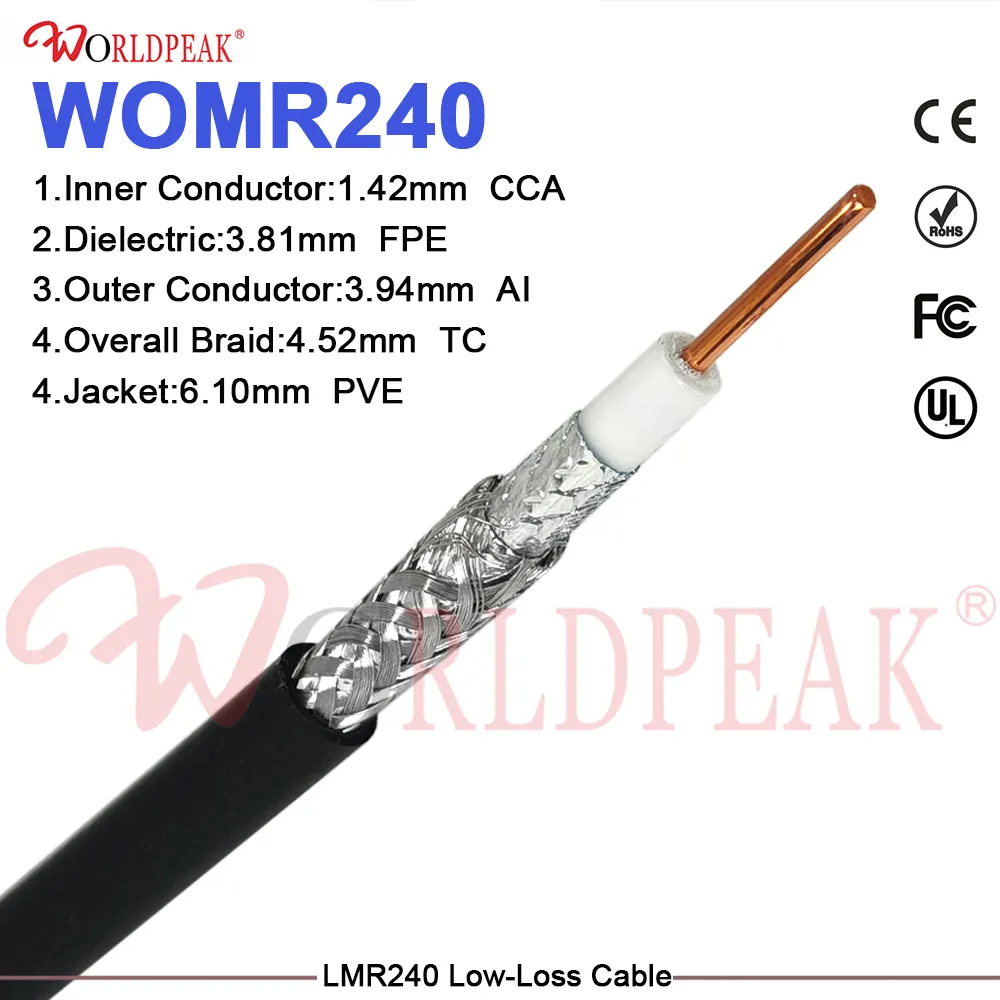
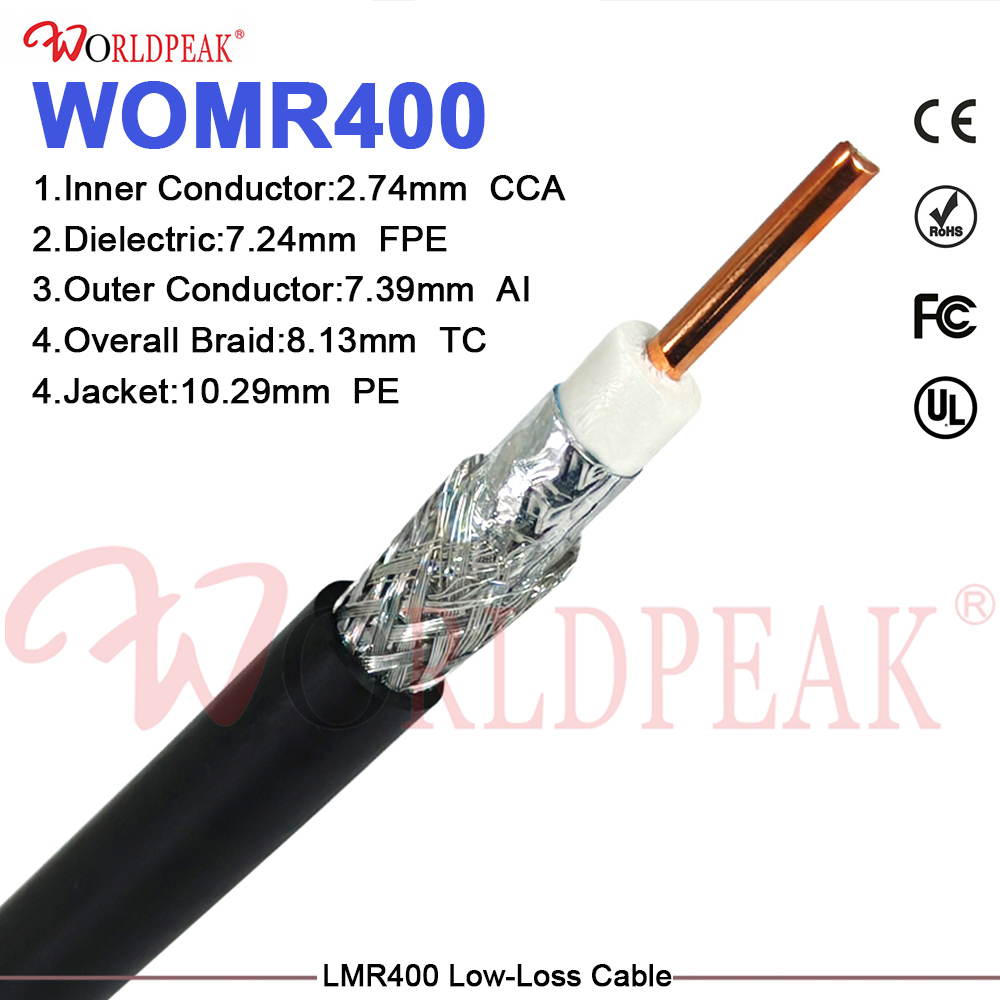
- Operating frequency above 6 GHz: At higher frequencies, cable loss per unit length becomes a dominant system parameter. Selecting the cable type — LMR400 for moderate-loss applications, or lower-loss alternatives for high-frequency links — may require a custom build to match the exact cable type to your connector interface and length requirement.
- Environmental or mechanical constraints: Applications requiring assemblies to survive temperatures from -55°C to +200°C, continuous flexing cycles, or chemical exposure typically require materials not available in standard catalog configurations. Military and aerospace programs routinely specify custom coaxial jumpers built to MIL-DTL-17 cable and MIL-STD-348 connector interface standards.
Note that custom does not necessarily mean high-volume. Small-batch custom assemblies for prototyping and system development are a common procurement scenario, particularly in industrial automation and defense integration programs where a custom wire harness incorporating coaxial elements must be validated before production quantities are committed.
Specifying a Custom Coaxial Jumper: What to Include in Your RFQ
Incomplete specifications are one of the most consistent sources of delivery problems in custom cable assembly procurement. A well-prepared RFQ for a custom coaxial jumper should define all of the following:
- Impedance: 50 Ω (standard for RF and microwave systems) or 75 Ω (common in broadcast and video distribution — also relevant if you are integrating rca to coaxial signal paths into a hybrid distribution system)
- Frequency range: Specify the operating band, not just the connector type. A connector interface rated to 18 GHz does not guarantee your assembly will meet insertion loss requirements at your actual operating frequency.
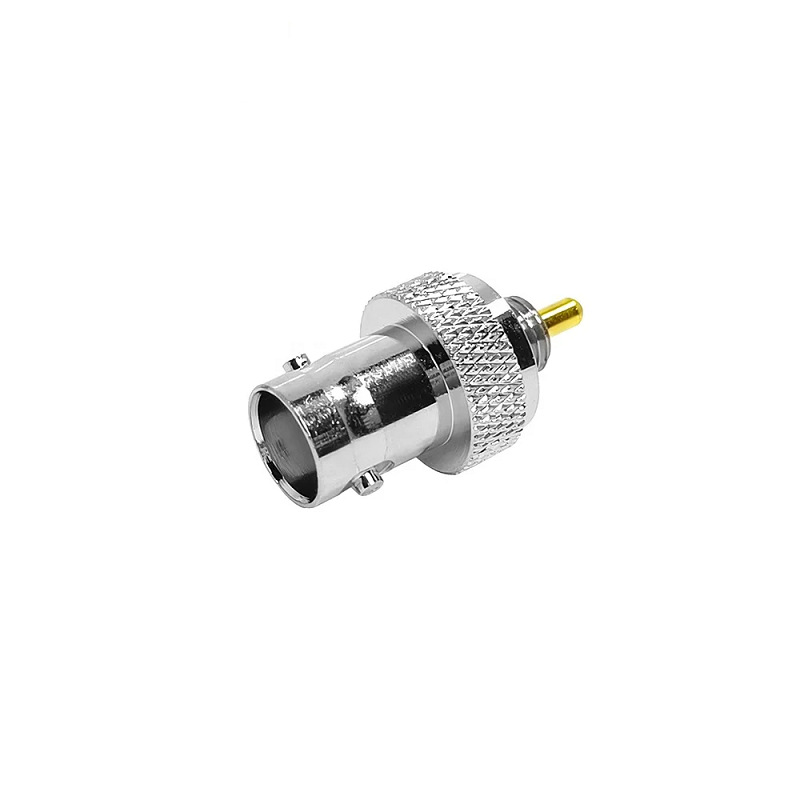
- Connector type, interface standard, and gender at each end: Include the mating standard (SMA, N-type, TNC, BNC, etc.), gender (male/female), and coupling mechanism (screw thread, push-on, quick-connect)
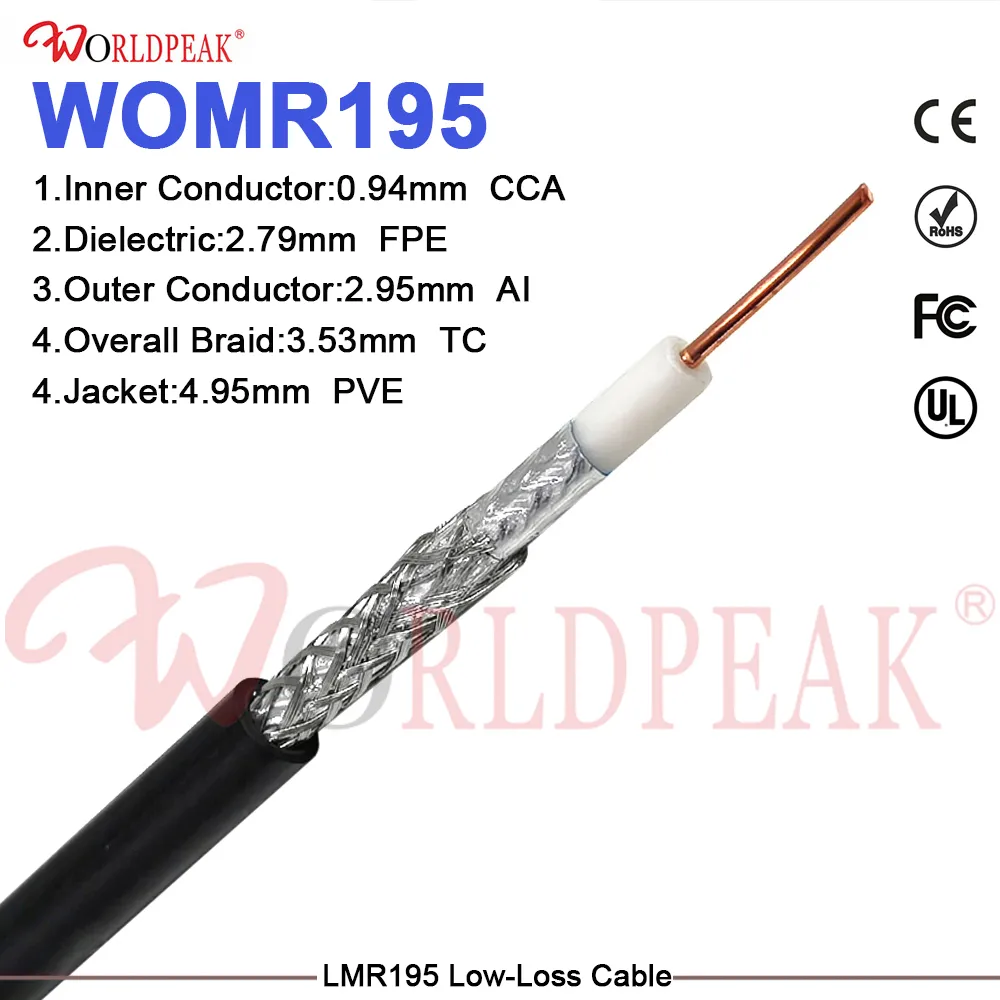
- Cable type and jacket material: Specify cable type by designation (e.g., LMR400-equivalent for flexible low-loss runs) or by electrical characteristics if substitution is acceptable
- Assembly length and tolerance: Nominal length plus acceptable tolerance; for phase-matched sets, specify maximum phase deviation across the set
- Environmental and mechanical requirements: Temperature range, bend radius, vibration rating, IP rating for connector-cable interface sealing
Documentation quality at the RFQ stage also signals something about the manufacturer's quality culture. A supplier who provides clear assembly drawings, test specifications, and material traceability in their quotation response is likely operating a quality management system that translates to consistent production output. This is not a minor consideration — procurement teams who have received batches that passed incoming inspection but failed in the deployed system often trace the problem back to a supplier who lacked documented process controls.
Evaluating Custom Coaxial Jumper Manufacturers: Capacity, QMS, and Lead Time
Not all RF cable assembly manufacturers offering custom builds have equivalent quality infrastructure. Key evaluation criteria for a B2B custom coaxial jumper program include:
- Quality management certification: ISO 9001:2015 certification establishes a baseline for documented manufacturing processes, corrective action systems, and product traceability. For defense and aerospace programs, AS9100 or MIL-DTL-17 compliance may be required by contract.
- Electrical testing capability: Pre-shipment insertion loss and VSWR sweep measurement across the operating frequency range, with test data included in shipment documentation, is the standard expectation for quality-critical custom assemblies. Verify that the manufacturer's test equipment covers your frequency range before placing volume orders.
- Custom fabrication capacity: Confirm the manufacturer can handle your specific cable type, connector interface combination, and build quantity. Some manufacturers have strong coverage for SMA and N-type assemblies up to 18 GHz but limited capability for specialty low-loss cable types or non-standard jacket materials.
- Lead time commitments and MOQ: Custom coaxial jumper lead times typically run 2–6 weeks for production quantities, with sample lead times often shorter for established suppliers. In most cases, accepting a lead time appropriate for verified-quality production is the right tradeoff — rushing a custom assembly through production to meet an aggressive schedule is one of the more reliable ways to receive non-conforming product.
Worldpeak's manufacturing capability covers custom coaxial cable assembly fabrication including non-standard lengths, mixed-connector configurations, and application-specific jacket specifications across SMA, N-type, BNC, TNC, and UHF interfaces, with pre-shipment electrical testing for insertion loss and VSWR. For buyers evaluating cable options for low-loss runs, the LMR400 Low-Loss 50 Ohm Coaxial Cable represents a well-characterized base cable for custom assembly builds. For applications requiring a specific low-profile coaxial option, the Worldpeak RG196 50-Ohm Coaxial Cable Engineering Data and Selection Guide provides technical parameters for evaluating suitability.
Industry Applications: Where Custom Coaxial Jumpers Are Most Common
Three industries account for the majority of custom coaxial jumper procurement volume:
Telecommunications and mobile network infrastructure: Base station antenna connections frequently require specific cable lengths to manage signal routing within equipment cabinets and between units. Feeder systems integrating multiple radio units at a single site may include fiber to coaxial converter interfaces where signal path management at the coaxial segment requires custom assembly dimensions.
Industrial automation and test systems: Automated test equipment (ATE) and industrial RF monitoring systems typically use custom coaxial jumpers as part of a larger custom wire harness that must route through specific cable management paths, meet bend radius constraints from the mechanical design, and mate to non-standard interface panels. Standard catalog assemblies rarely fit these requirements without modification.
Military and defense electronics: Defense integration programs typically require custom coaxial jumpers built to MIL-DTL-17 cable standards with connector interfaces conforming to MIL-STD-348. Environmental qualification requirements — including vibration, temperature cycling, and salt fog testing — typically cannot be met by commercial catalog assemblies.
MOQ, Sample Process, and Acceptance Testing
For most custom coaxial jumper programs, the procurement process involves three stages:
- Specification confirmation: Review the RFQ response against your technical requirements. Confirm that the manufacturer's cable designation, connector sourcing, and test specification are explicitly stated — not assumed.
- Sample/prototype build: Request a small quantity of samples before committing to production volume. Sample quantities for custom assemblies typically range from 2–10 pieces. Test samples against your acceptance criteria before production release.
- Acceptance testing: Define your incoming inspection criteria before receiving production quantities. For RF cable assemblies, this typically includes insertion loss measurement at spot frequencies, VSWR measurement, and physical inspection of connector attachment and jacket condition. Suppliers should provide test data per assembly; if they cannot, treat that as a quality system flag.
To put it plainly: a custom coaxial jumper is justified when your application imposes requirements in length, connector configuration, frequency, or environment that standard catalog assemblies cannot meet. When those conditions are present, the investment in proper specification, supplier qualification, and sample testing pays back in system reliability.