EN
EN

Why ODM rf component matching reduces extra assembly workload
If you have spent time on a production line integrating rf attenuators into finished equipment, you have likely run into a version of the same frustration: the attenuator arrived to spec on paper, but it did not fit cleanly into the chassis without modification. The mounting footprint was off by a few millimeters, the interface connector was not the orientation your PCB layout assumed, or the pigtail cable was long enough to require coiling inside a tight enclosure—adding insertion loss you did not budget for. So your team adapted. They reworked the brackets, trimmed the cables, found workaround solutions. It cost time, it sometimes introduced variation, and in a volume production context, that overhead accumulates.
This is the core problem that ODM component matching is designed to solve. Rather than sourcing standard rf attenuators and adapting them to fit your design, ODM matching starts from your system requirements and builds the component configuration around them. The result is a component that arrives ready to install, not ready to be modified.
What ODM matching actually covers for rf attenuators
ODM matching for rf attenuators is more specific than it might sound. It does not mean custom-designing a new attenuator from scratch for every order. In practice, it means aligning the selectable or configurable parameters of a standard-class attenuator to your actual system needs:
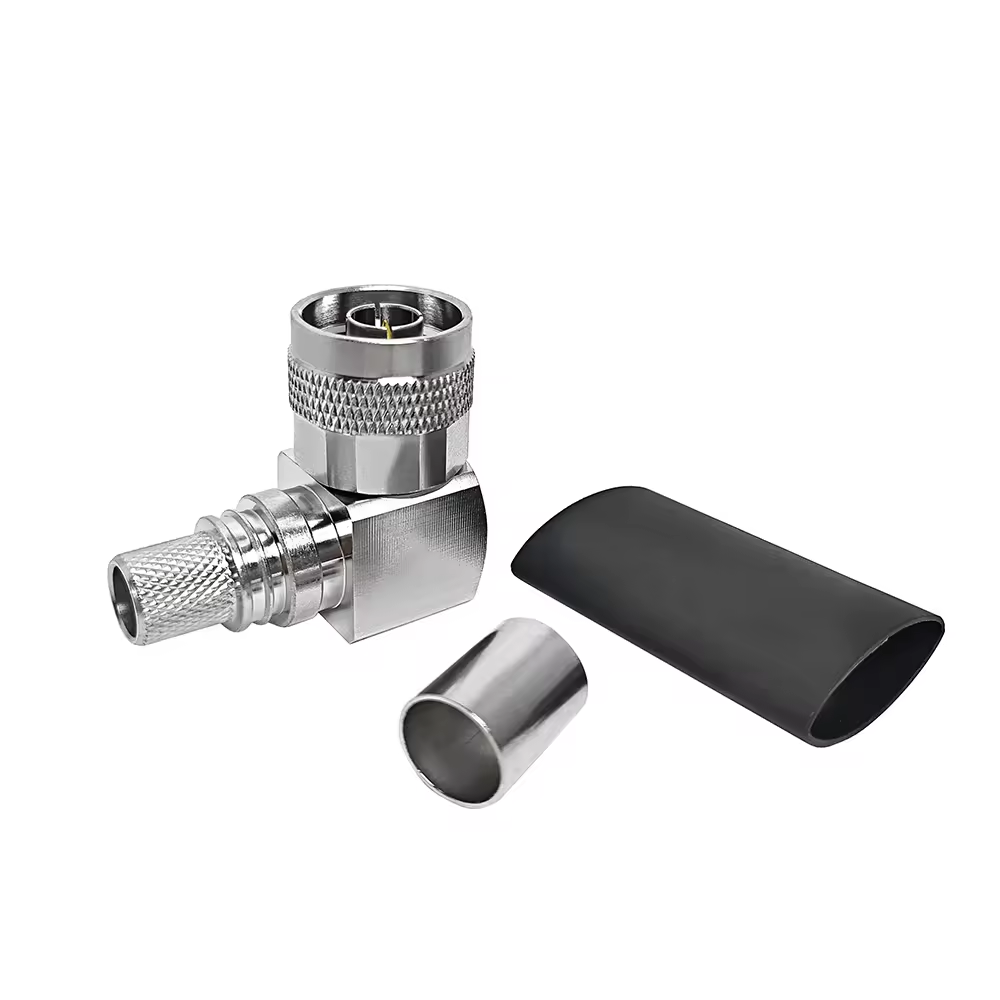
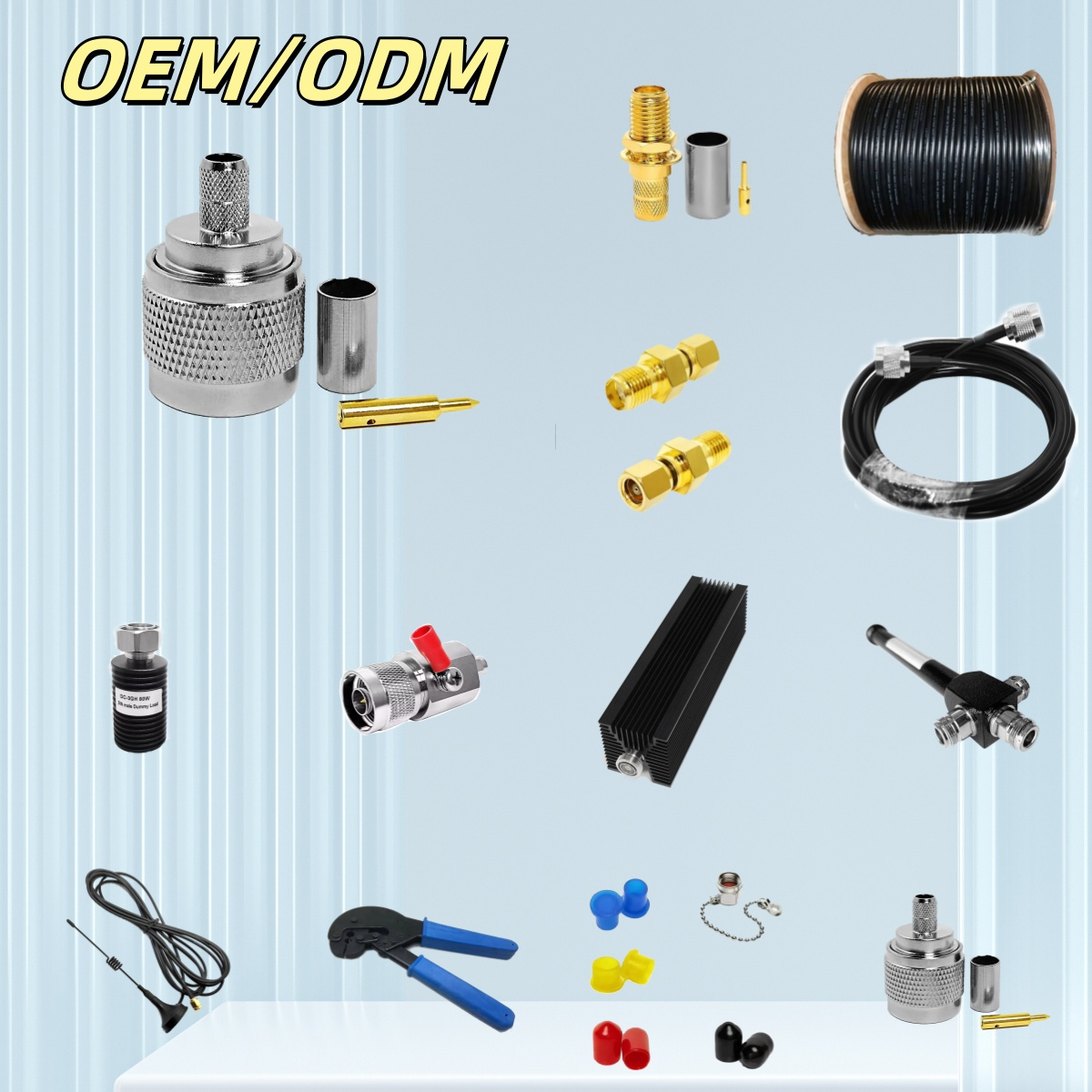
- Connector interface type and gender. Whether your system uses SMA, N-type, BNC, or another standard, and whether the attenuator termination needs to be male or female on each end, can be specified precisely. Receiving the wrong gender or an incompatible interface type is one of the most common integration-phase delays in multi-source procurement—ODM supply avoids it entirely.
- Physical body dimensions and mounting hole pattern. If your equipment chassis has a defined mounting position for rf attenuators, having the body dimensions and hole pattern confirmed before production shipment means your assembly fixtures do not need to be modified per batch.
- Pre-cut cable length. Where rf attenuators are supplied with pigtail leads or cable tails, ODM length pre-cut eliminates the in-house trimming step and the associated risk of degraded terminations from rushed field cutting. A coiled excess cable inside a sealed enclosure is not just an aesthetic problem—it can introduce standing waves that affect measured insertion loss at higher frequencies.
- Attenuation value and power handling. Standard catalogs offer fixed attenuation steps. ODM supply can align the actual dB value and power rating to the operating point your system requires, rather than requiring you to compensate at the system level.
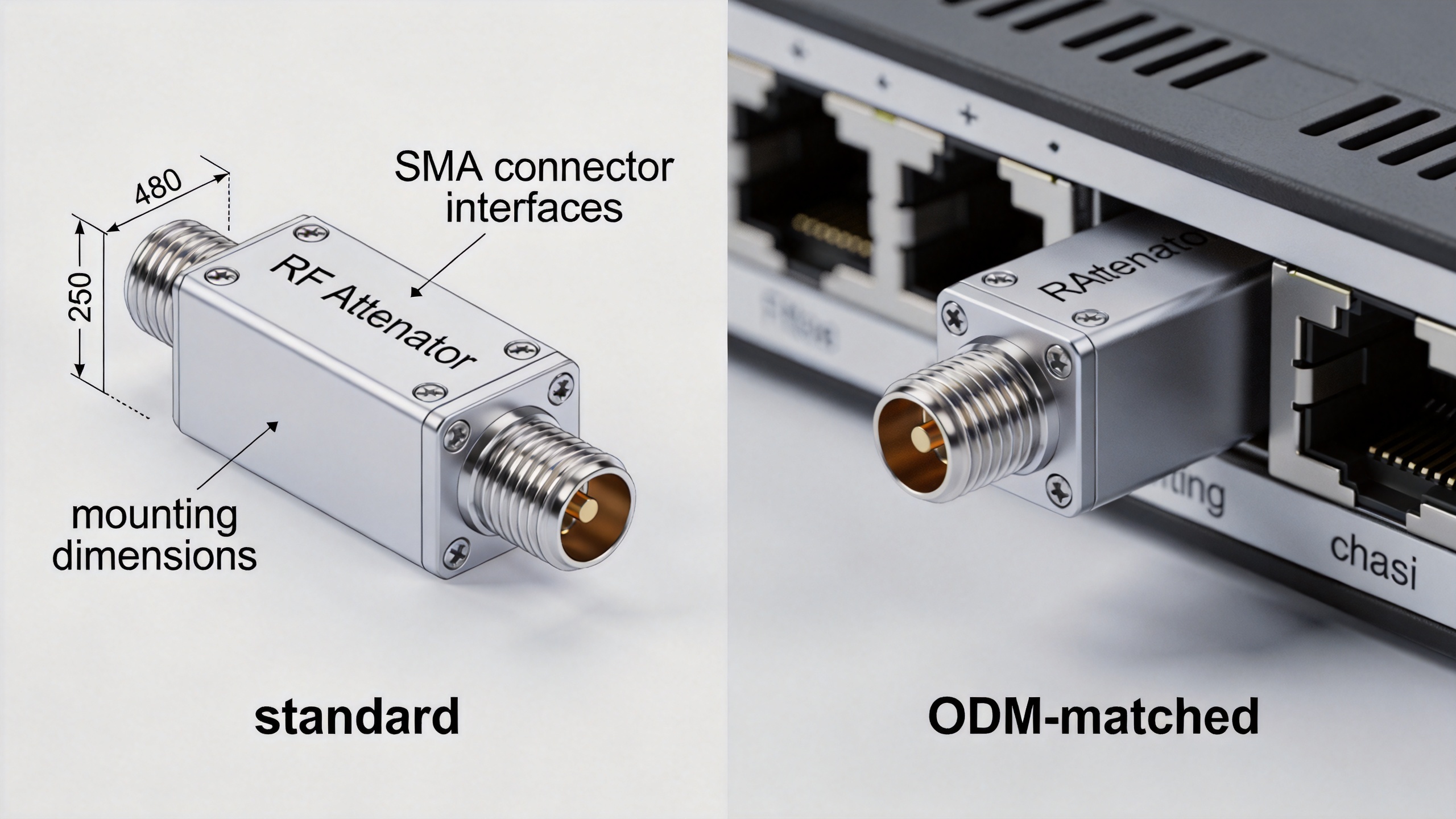
The same matching logic applies to rf coupler integration. Where a coupler is used in the same assembly as rf attenuators—for monitoring, splitting, or test port functions—ODM-matched couplers with consistent interface types and body dimensions simplify the adjacent mechanical and electrical design constraints simultaneously.
The real cost of standard parts plus rework
Standard catalog rf attenuators often look like the lower-cost option, and on a pure unit-price comparison, they frequently are. The full picture shifts once you factor in the labor your team spends adapting components that do not fit first time.
Consider a moderate-volume production run of 200 units per month, where each unit requires rf attenuators to be modified or adapted during assembly. If each modification takes an average of 15 minutes of technician time—bracket adjustment, cable trim, re-termination verification—that is 50 hours of assembly labor per month dedicated to compensating for component-to-system mismatch. At typical contract manufacturing labor rates, that number is not trivial. Multiply it by 12 months and it often exceeds what an ODM configuration premium would have cost on a per-unit basis.
There are also quality implications. Rework steps introduce variability. Two technicians trimming cable tails to what they estimate as the right length will not consistently produce the same result. Two machinists drilling modified bracket holes will introduce tolerance variation that accumulates across units. ODM direct supply provides a dimensionally consistent, pre-verified configuration that eliminates this source of production variance.
The delivery schedule dimension matters too. Rework is not invariably completed at assembly time—sometimes non-conforming standard parts are flagged at incoming inspection, returned, and reordered with corrections. That cycle adds lead time that ODM specification upfront would have avoided.
Where Worldpeak's ODM capability fits this picture
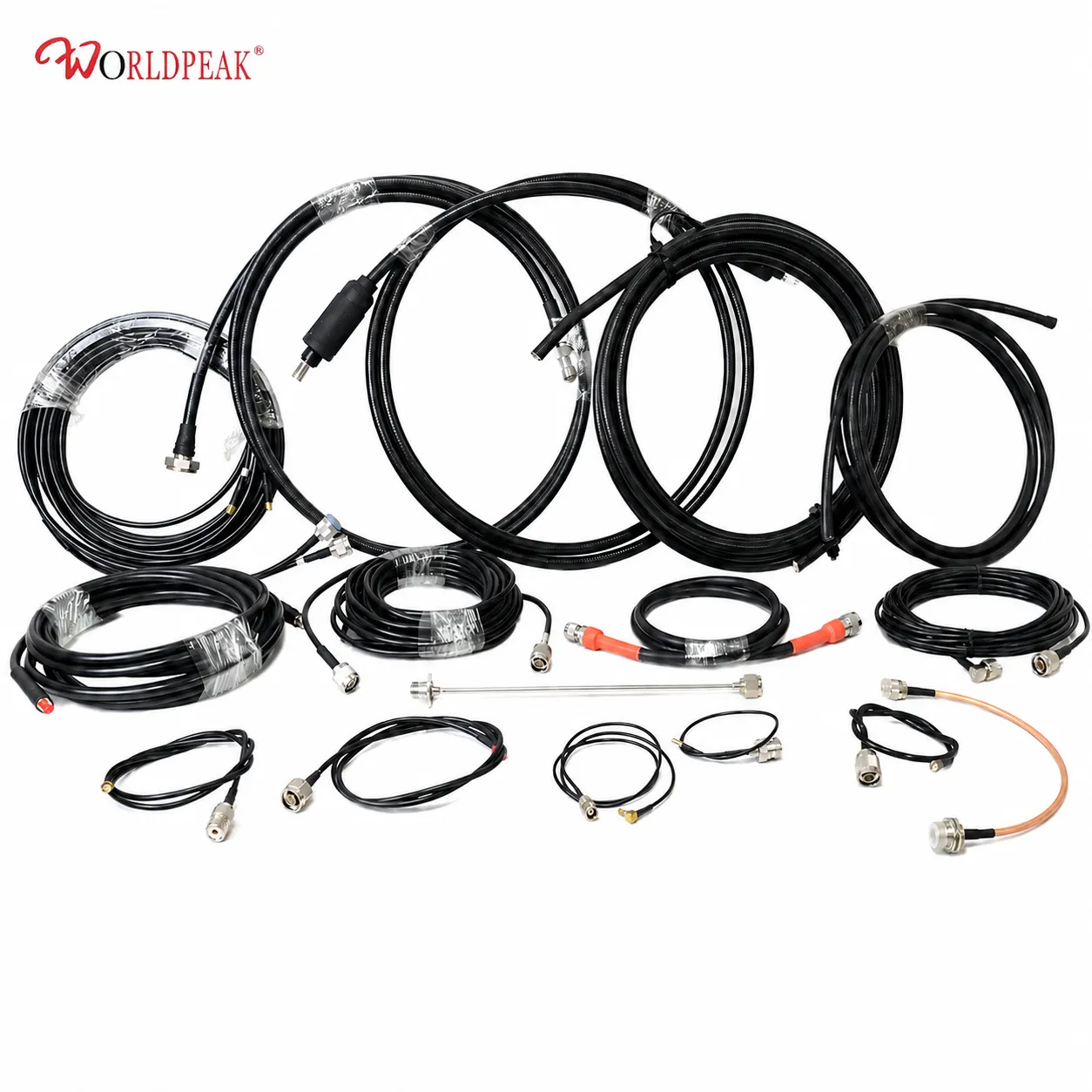
Worldpeak produces rf attenuators and associated passive RF components with an ODM service structure designed around exactly these integration requirements. The pre-sales specification process covers the parameters that matter at the assembly stage: connector type, gender, body dimensions, mounting configuration, and cable tail length. For buyers sourcing rf attenuators alongside rf coupler components or other passive elements, Worldpeak's product coverage across SMA, N-type, BNC, TNC, and other standard interfaces means the same ODM specification process can align multiple component types in a single supplier relationship.
The practical implication for equipment manufacturers is that the conversation happens before the order, not during production. A specification review with the supplier's technical team—covering the dimensions, interfaces, and electrical requirements your system needs—produces a configuration that goes into your approved supplier documentation and ships to those specifications on each subsequent order. The incoming inspection step becomes a confirmation rather than a discovery process.
For small-batch development and prototype phases, Worldpeak also supports short-run ODM samples, which means the dimensional and interface verification can happen at the prototype stage, before your production fixtures and assembly processes are locked in. Catching a mounting footprint mismatch on a ten-unit prototype run is far less disruptive than discovering it at a 200-unit production ramp.
When ODM matching is the right choice
Not every rf attenuator procurement needs ODM matching. For bench test setups, laboratory stock, or single-unit builds where adaptation time is absorbed by engineering anyway, standard catalog parts are entirely appropriate. The ODM model is most valuable when:
- Your production volume is high enough that assembly labor adds up across units
- Your chassis or PCB has specific mounting constraints that standard body dimensions do not match
- You are integrating rf attenuators in enclosed assemblies where cable tail length affects both insertion loss and thermal management
- You are sourcing rf attenuators alongside rf coupler or other passive components that also benefit from matched interface specifications
- Your quality management system requires incoming component consistency across batches, rather than batch-to-batch dimensional variation
Across those scenarios, the numbers tend to work in favor of ODM: a configuration premium that is smaller than the rework labor it replaces is effectively a per-unit saving, not an added cost. The assembly line runs faster, the variance is lower, and the first-pass yield improves. That is what ODM rf component matching delivers in practice, and why equipment manufacturers who move to it tend to keep it in their procurement process.
If you are evaluating whether ODM rf attenuator supply makes sense for your current program, the starting point is a specification conversation with a supplier who can confirm which parameters are configurable for your required attenuation value and power rating, and what the minimum order quantity threshold is for ODM configuration. Worldpeak can support that conversation directly, with English-language technical communication and a pre-sales specification review process designed to get the matching right before the first production shipment.