rp-tnc-male-to-rp-tnc-female-lightning-arrester---dc---6-ghz, rp-tnc-male-to-rp-tnc-female-lightning-arrester---dc---6-ghz, /rf-lightning-arrester
Inquiry
rp-tnc-male-to-rp-tnc-female-lightning-arrester---dc---6-ghz, rp-tnc-male-to-rp-tnc-female-lightning-arrester---dc---6-ghz, /rf-lightning-arrester
Inquiry

RP-TNC Male to RP-TNC Female Lightning Arrester - DC - 6 GHz

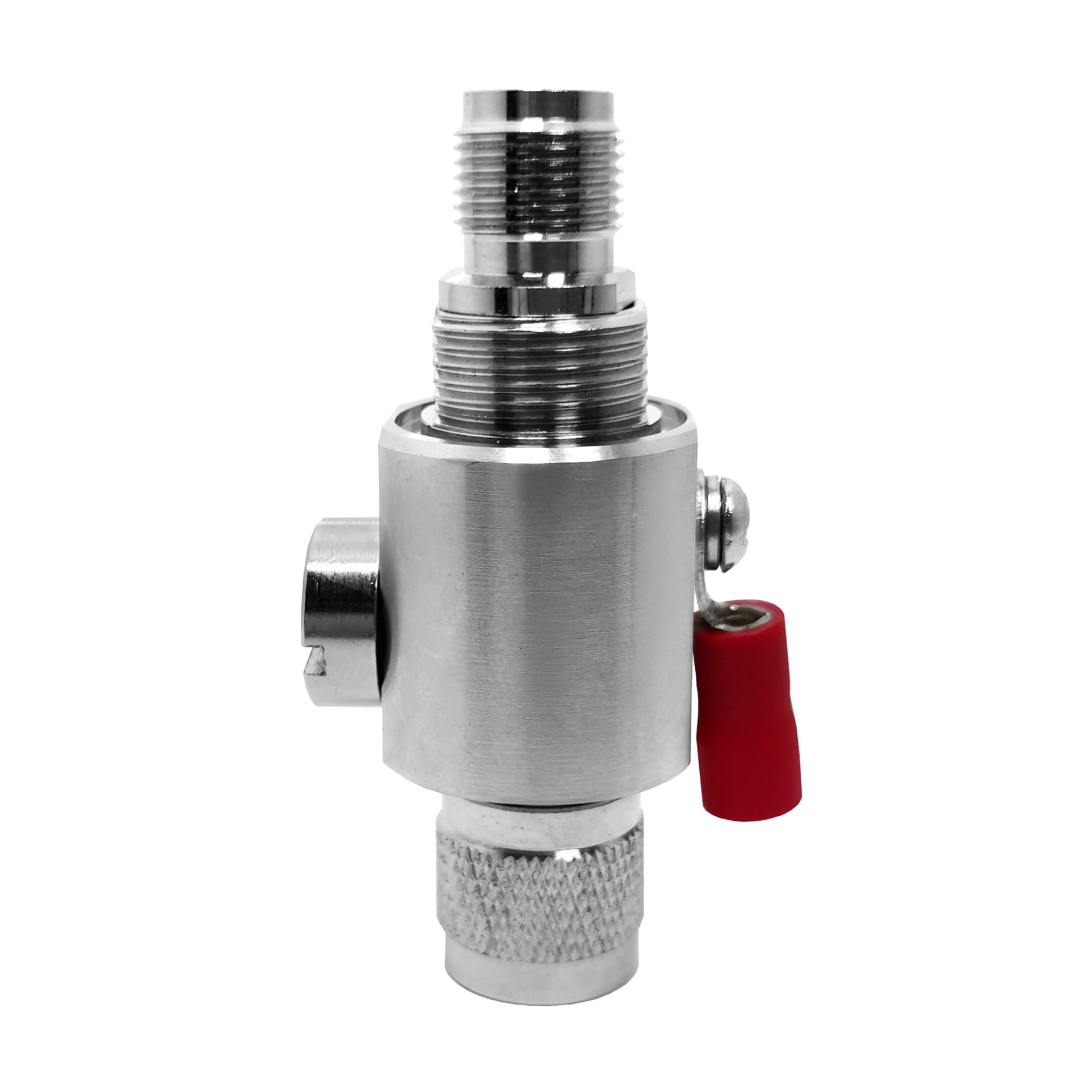
This RP-TNC Male to RP-TNC Female lightning arrester is a GDT based RF surge protector designed for DC - 6 GHz operation. It sits in the transmission line between the antenna and the radio equipment, diverting lightning-induced transients to ground before they reach the sensitive front end. The 50 ohm design holds insertion loss at 0.3 dB with a VSWR of 1.35 or better across the passband.

Request a Quote  |  Download Datasheet  |  Ask an Engineer

Request a Quote WhatsApp
  • Overview

Overview

Product Overview

The RP-TNC Male to RP-TNC Female lightning arrester is an in-line RF surge protector for antenna systems operating from DC to 6 GHz. It uses a replaceable 90 V gas discharge tube (GDT) rated for 10 kA on an 8/20 us surge waveform. During normal RF operation, the GDT remains high impedance so the coaxial path can carry the signal with 0.3 dB insertion loss. When a lightning-induced transient appears on the line, the tube switches rapidly and directs the surge toward the grounding connection rather than the connected radio equipment.

This GDT-based arrangement is intended for installations that need low capacitance and a low-loss RF path. The replaceable protection element can be inspected or changed following a major surge event. Compared with diode-style solutions, the triggering threshold is higher, but the design is well suited to many outdoor antenna-line applications where maintaining RF performance is important.


Protection Mechanism and Construction

  • Protection Element: The central GDT is specified at 90 V with 10 kA (8/20 us) surge capability. Its serviceable design allows replacement without removing the complete cable assembly.
  • Grounding Path: A side-mounted ring terminal connects the arrester to the site earth bar. A short, direct ground lead helps limit the transient energy that can continue toward protected equipment.
  • Body: The bulkhead-mount body is machined from brass and finished with corrosion-resistant plating, allowing it to be fixed directly to a panel or cable-entry surface.
  • Connector Interface: RP-TNC male and RP-TNC female interfaces connect to compatible standard cable assemblies without requiring an adapter change.


Reference Technical Specifications

The values below describe the referenced configuration of the RP-TNC Male to RP-TNC Female lightning arrester. Confirm final specifications against the production configuration before system deployment.

Parameter

Specification

Notes

Connector Interface

RP-TNC Male to RP-TNC Female

Standard RF connector

Mounting Style

Bulkhead

Body configuration

Impedance

50 ohm

System impedance

Frequency Range

DC - 6 GHz

Passband

Insertion Loss

0.3 dB

Across passband

VSWR

1.35

Maximum

Power Handling

100 W

CW, reference

Discharge Element

90 V

Gas discharge tube

Surge Current

10 kA (8/20 us)

8/20 us waveform

Grounding

Ring terminal

M4 lug, ground wire

Body Material

Machined brass

Corrosion-resistant plating

Weight

91.3 g

Approximate

Typical Application

WiFi 6 access point, outdoor AP, MIMO antenna

Primary use case

These reference figures apply to this protection family and should be verified for the final supplied configuration.


Engineering Comparison

  • vs. Quarter-Wave Stub: Quarter-wave devices work around a selected design frequency and ground DC, so their usable range is comparatively narrow. The RP-TNC Male to RP-TNC Female lightning arrester supports a DC - 6 GHz passband, making it practical where a multi-band antenna line is used.
  • vs. Diode-Based Protector: Diode limiters can react quickly but may add capacitance that affects high-frequency use and power capacity. This arrester is specified with 0.3 dB insertion loss and 100 W reference power handling for RF transmission-line use.
  • vs. DC Block Surge Protector: A DC block prevents DC and low-frequency signals from passing but does not create the same direct earth route for high-energy surge diversion. This design uses the grounding connection to provide that path for outdoor antenna installations.


Applications

  • WiFi 6 access point, outdoor AP, MIMO antenna: The RP-TNC Male to RP-TNC Female lightning arrester can be installed on antenna lines serving WiFi 6 access points, outdoor access points, and MIMO antennas to help manage induced transients before they reach the radio.
  • Tower and Rooftop Installations: Install near the cable entry to a shelter, enclosure, or cabinet so the transmission line has a grounding point at the system boundary.
  • Multi-Band Radio Sites: The DC - 6 GHz frequency range can support antenna lines across several radio bands without a separate retuning step.
  • Equipment Racks and Test Systems: The RP-TNC Male to RP-TNC Female lightning arrester may be used at an equipment input to route surge energy away from modules or instruments connected through longer coaxial runs.


Installation and Grounding Notes

  • Grounding First: Connect the grounding lug to the earth bar using the shortest practical conductor. The effectiveness of the RF surge protector depends substantially on this low-inductance grounding route.
  • Mounting: Secure the bulkhead body at the cable-entry point with the grounding lug oriented for a direct lead to ground, inside the site lightning-protection zone.
  • Torque and Sealing: Use the connector manufacturer’s specified torque. For exterior locations, protect the connector interface with appropriate weatherproofing tape or a weather boot.


OEM and B2B Support

  • OEM Customization: For volume orders, custom connector combinations, alternate 90 V or 230 V discharge options, and special plating may be available.
  • Cable Assembly Options: Factory-terminated jumper assemblies with the RP-TNC Male to RP-TNC Female lightning arrester pre-installed can be supplied for simplified system integration.
  • Packaging and Marking: Protective packaging, customized labels, and batch test reports are available on request.


FAQ

Q: When should the gas discharge tube be replaced?

A: The 90 V tube is referenced for 10 kA (8/20 us). After a significant surge, test the tube; replace it if leakage is present or it does not pass a hold-off check.


Q: Will the RP-TNC Male to RP-TNC Female lightning arrester affect a DC - 6 GHz signal?

A: The listed insertion loss is 0.3 dB and maximum VSWR is 1.35 across the stated passband, supporting use in antenna-line applications with limited RF impact.


Q: Can this arrester be used indoors?

A: Yes. It can be fitted at the equipment end of a coaxial run or at the cable entry point as part of the site grounding arrangement.
Featured Products