 EN
EN

7/16 DIN Connector Guide: High-Power RF Standard
2026/09/24
Choose a 7 16 connector for high-power RF: compare DIN and Type N, protect PIM margin, and apply field installation checks.
2026/06/24

Introduction
Electromagnetic interference (EMI) has evolved into a dominant technical challenge in the systematic design, batch production, and field deployment of modern high-frequency electronic systems. With the continuous miniaturization of electronic hardware, escalating circuit integration density, and widespread adoption of high-speed, high-frequency signal transmission technologies in 5G, IoT, and industrial precision equipment, electromagnetic compatibility (EMC) defects and interference risks have become increasingly prominent. Uncontrolled EMI not only distorts signal transmission and reduces equipment operating accuracy but also triggers system instability and hardware burnout in severe cases. This technical report conducts a systematic and comprehensive analysis of electromagnetic shielding effectiveness (SE), focusing on standardized quantitative evaluation methodologies, frequency-dependent performance rules, and key practical implementation constraints to provide reliable technical guidance for high-performance shielding design.
Methodology
The scientific assessment framework adopted in this research combines rigorous theoretical modeling and standardized empirical validation to ensure data accuracy and conclusion credibility. High-precision computational electromagnetic simulations are performed via the finite-difference time-domain (FDTD) technique, which accurately predicts shielding effectiveness fluctuation rules across full-spectrum frequency bands and simulates electromagnetic field propagation and attenuation inside shielding structures. All simulated results are further verified through strictly controlled laboratory experiments, fully complying with the IEEE-STD-299.1-2013 international testing protocols to guarantee standardized and repeatable test data.
The study systematically investigates three fundamental physical mechanisms that determine electromagnetic shielding performance, covering the entire process of electromagnetic wave attenuation: material interface reflection loss, internal absorption loss of shielding media, and multiple internal reflection superposition and cancellation effects. To ensure comprehensive and multidimensional evaluation, the experimental testing covers complete core parameters: a wide frequency range from 100 kHz to 10 GHz, material thickness gradients varying from 0.1 mm to 2.0 mm, a conductivity spectrum spanning 10⁰ to 10⁷ S/m, and diverse incident wave configurations including plane waves, near-field electric waves, and near-field magnetic waves that fit actual engineering scenarios.
Experimental Findings
Material Performance Characteristics
Statistical analysis of experimental data reveals obvious hierarchical performance differentiation among different types of shielding materials. Advanced conductive composite materials exhibit outstanding wave absorption capabilities and stable attenuation performance for high-frequency electromagnetic waves above 1 GHz. In contrast, traditional metal enclosure materials rely on excellent surface conductivity to maintain steady reflection-dominated shielding advantages in the low-frequency band below 500 MHz. In particular, the hybrid shielding structure formed by layered conductive polymers and precision metallic meshes perfectly integrates the absorption strengths of composite materials and the reflection advantages of metals, delivering optimal broadband shielding performance across full frequency bands.
Frequency-Dependent Behavior
Shielding effectiveness presents highly regular frequency-dependent characteristics, which can be clearly divided into three independent operational regimes with distinct dominant mechanisms. In the low-frequency regime below 100 MHz, shielding performance is completely dominated by electromagnetic wave reflection, where material surface conductivity acts as the core decisive indicator. Its performance variation strictly conforms to the theoretical formula: SE_R ≈ 39.5 + 10 log(σ/μf), showing a direct positive correlation with material conductivity. The mid-frequency transition zone from 100 MHz to 2 GHz features the coexistence and mutual competition of reflection and absorption mechanisms, where material thickness gradually becomes the key factor restricting shielding efficiency. For the high-frequency regime above 2 GHz, material absorption plays a leading role, and shielding effectiveness is positively proportional to both material thickness and magnetic permeability.
Aperture and Seam Effects
In-depth quantitative analysis of structural discontinuities proves that tiny structural defects are the primary cause of shielding performance degradation in practical engineering. Test data confirms that a single 1 mm micro aperture can reduce shielding effectiveness by approximately 20 dB at 1 GHz. Continuous assembly seams with a 0.1 mm gap will trigger 15–25 dB performance attenuation, with specific degradation amplitude affected by the relative orientation between gaps and incident electromagnetic fields. Reasonable installation of elastic EMI gaskets at structural joints can effectively eliminate gap leakage, restoring 85–92% of the theoretical maximum shielding performance for complete shielding structures.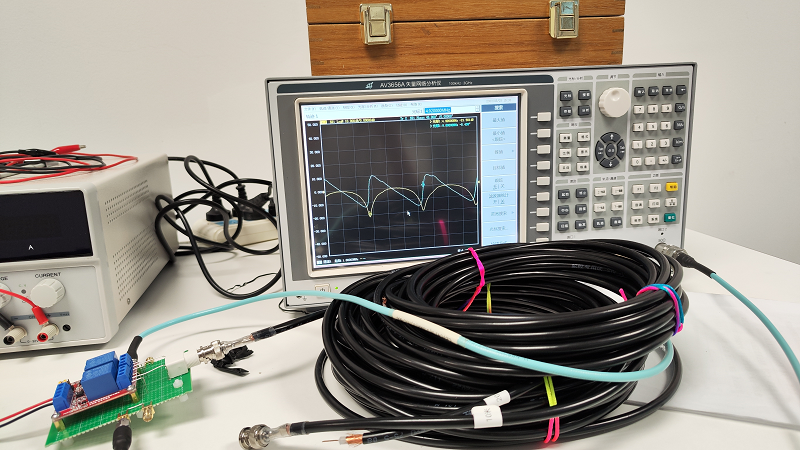
Analysis of Shielding Effectiveness Conclusions
Quantitative Performance Assessment
Synthetic evaluation of simulation and experimental data summarizes four core guiding principles for engineering shielding design. First, material selection requires comprehensive balancing of conductivity, magnetic permeability, thickness, and lightweight constraints. For scenarios requiring over 60 dB high-efficiency shielding above 2 GHz, magnetic filler composite materials achieve 15–20% higher shielding performance than traditional conductive coatings at the same thickness. Second, due to the inverse proportional relationship between operating frequency and required material thickness, targeted customized design is necessary for different frequency bands. For instance, 0.3 mm copper meets 80 dB shielding requirements at 5 GHz, while 100 MHz scenarios require 1.2 mm copper, a fourfold thickness gap. Third, aperture leakage follows a logarithmic attenuation rule, demanding strict control of structural discontinuities; the maximum linear size of any aperture must be kept below λ/20 to avoid obvious electromagnetic leakage. Fourth, layered hybrid shielding structures combining conductive polymers and thin metal layers deliver 10–15 dB better broadband performance than single materials, especially suitable for the 500 MHz–5 GHz transition band.
Practical Implementation Guidelines
Based on verified empirical test data, standardized engineering implementation specifications are formulated. For seam management, EMI gaskets with stable compression performance shall be adopted for mechanical joints, with compression force controlled at 8–12 N/cm to ensure stable contact resistance below 2.5 mΩ. For aperture mitigation, necessary heat dissipation and ventilation openings adopt honeycomb grid structures with a cell depth-diameter ratio greater than 8:1, maintaining over 60 dB shielding effectiveness up to 6 GHz. In terms of grounding strategies, single-point grounding systems provide stable shielding below 500 MHz, while multipoint grounding with interconnection spacing less than 25 mm is mandatory for high-frequency scenarios above 1 GHz.
Conclusion
This systematic analysis verifies that reliable electromagnetic shielding performance relies on collaborative optimization of material properties, structural geometry, and operating frequency parameters. There is no one-size-fits-all universal shielding solution; optimal engineering effects can only be achieved through application-specific targeted design that integrates theoretical mechanisms and practical construction constraints. With the continuous upgrading of 5G/6G communication systems and increasingly crowded spectral environments, future shielding technology research will focus on adaptive dynamic shielding solutions to cope with complex and variable electromagnetic interference environments, providing stronger technical support for high-stability operation of next-generation high-frequency electronic equipment.
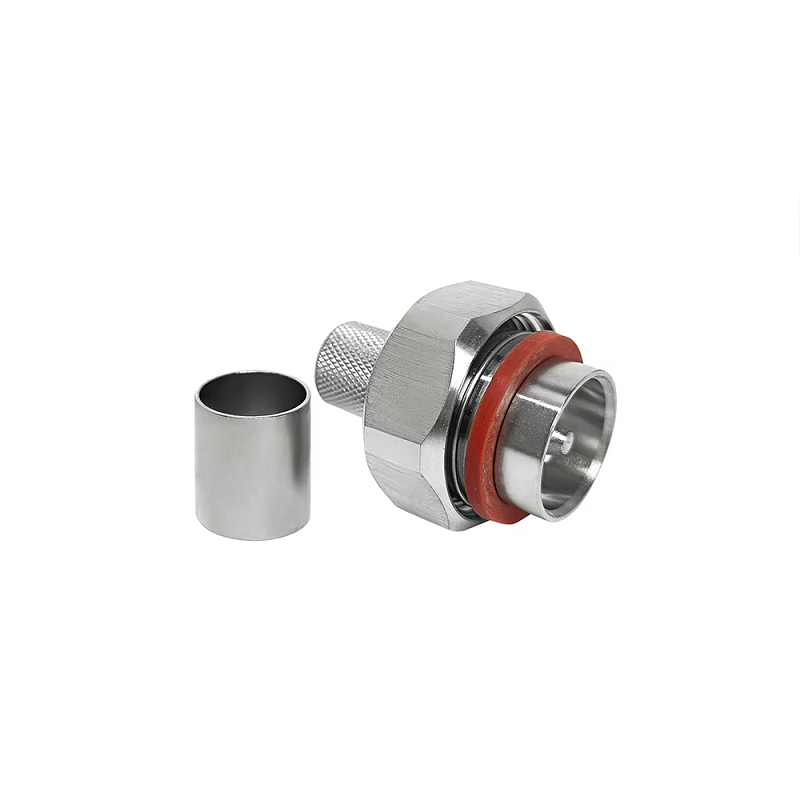
2026/09/24
Choose a 7 16 connector for high-power RF: compare DIN and Type N, protect PIM margin, and apply field installation checks.
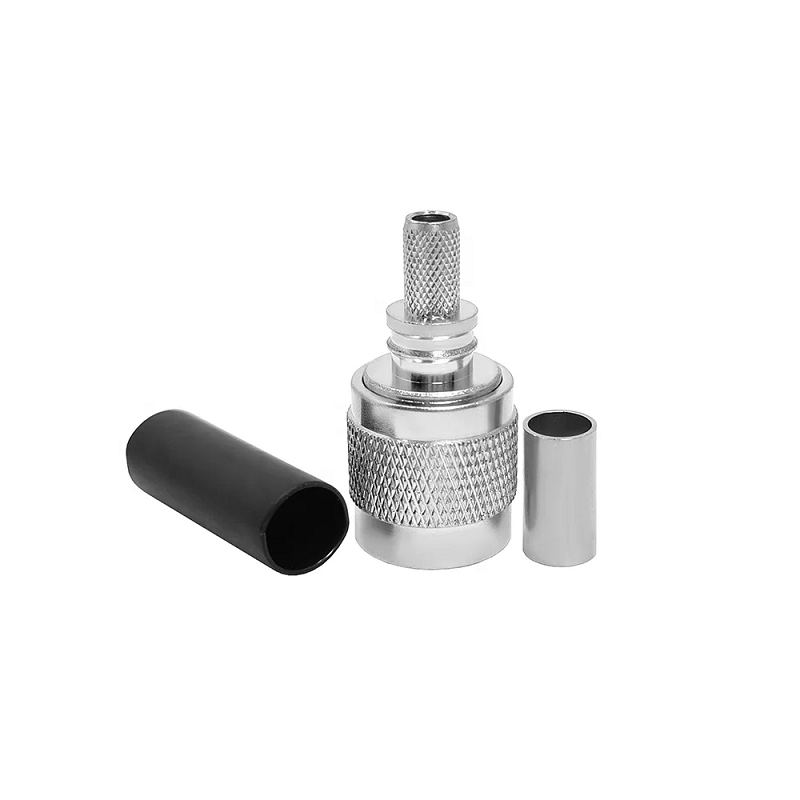
2026/09/24
Compare TNC connector types, specs and applications, including RP-TNC, bulkhead options, vibration performance and adapter selection.
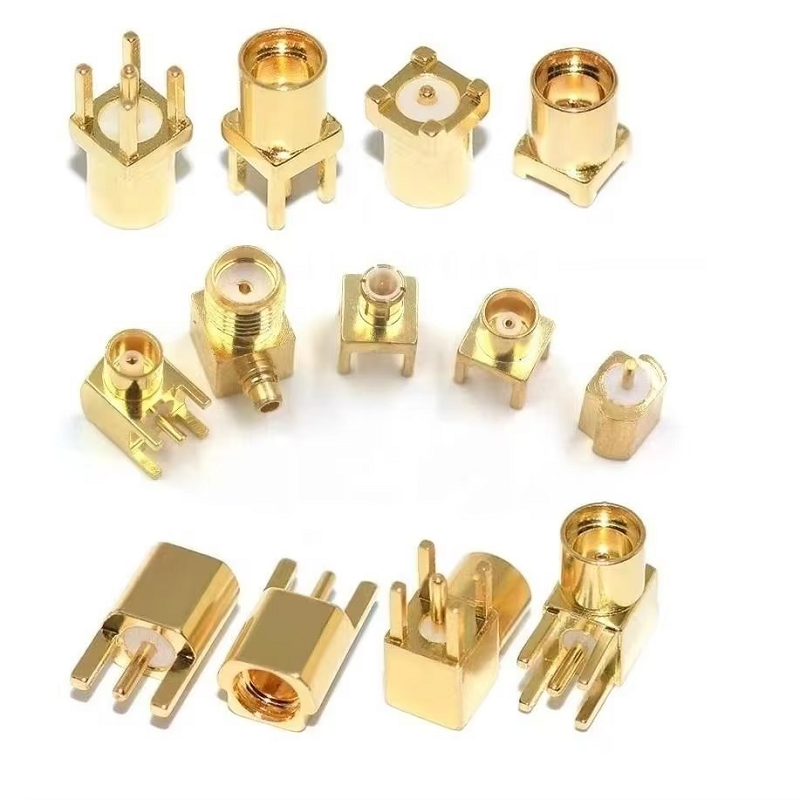
2026/09/24
Understand MMCX connector basics, RF limits, and how to choose the right coaxial interface for compact systems.
2026/09/24
Understand RP-SMA connector polarity, mating rules, frequency checks, and OEM termination options for reliable RF builds.
2026/09/24
Choose the right bnc male connector for RF, CCTV and test systems with clear 50Ω vs 75Ω, type and installation guidance.
2026/09/24
Compare LMR400 specs, cable loss, uses, connectors and RG8/RG213 alternatives with a practical RF loss-budget method.