EN
EN

When Should You Use a TNC Male Connector in RF Installations?
If you have been specifying RF connectors for a while, you probably know the BNC by instinct—it snaps in fast, disconnects cleanly, and covers most lab bench and broadcast needs without a second thought. But there are installation environments where the BNC's bayonet lock is not enough, and switching to a TNC male connector is the technically correct move rather than an over-spec choice. Knowing where that threshold is will save you trouble during commissioning and in the field.
The Core Difference: Threaded Coupling vs. Bayonet Lock
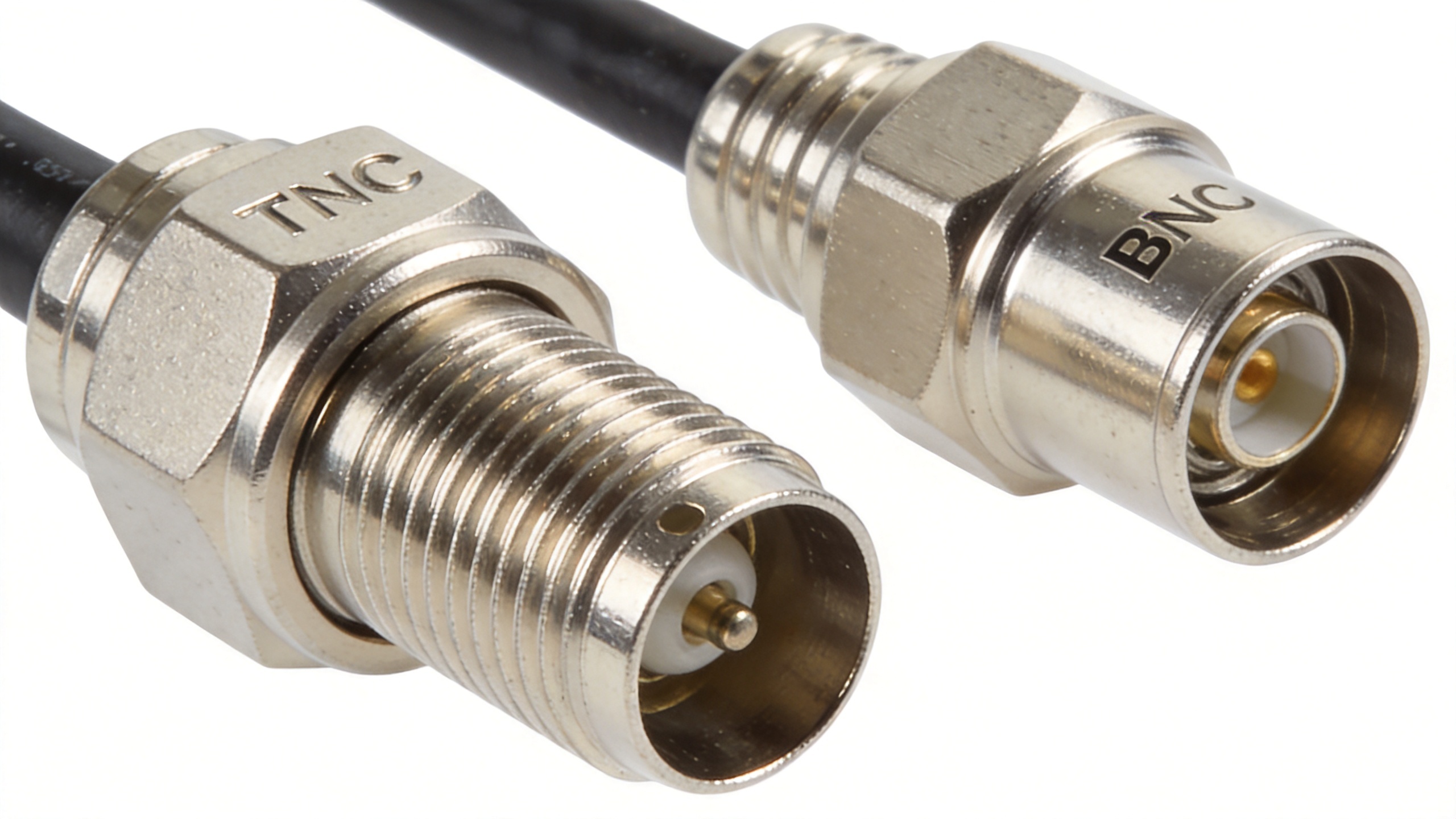
The TNC (Threaded Neill-Concelman) connector shares the same 50-ohm nominal impedance and similar body geometry as the BNC, but replaces the quarter-turn bayonet lock with a full threaded coupling. That design change has two direct consequences that matter in real installations.
First, the threaded interface holds its mating force under continuous vibration. BNC connectors can work loose when exposed to sustained mechanical vibration, whether from a vehicle chassis, rotating machinery, or rail-mounted equipment. The TNC's threaded collar maintains contact pressure across the vibration spectrum, and standard TNC designs are qualified for vibration per MIL-STD-202 Method 204, covering a frequency range of 10 to 2,000 Hz at 15 to 20 g peak acceleration. If the installation moves, or if the connected equipment moves, a tnc male interface is the appropriate starting point for connector selection.
Second, the threaded coupling supports reliable electrical performance at higher frequencies. BNC connectors are typically rated to around 4 GHz before impedance mismatch and radiation losses become problematic. Standard TNC connectors extend that ceiling to approximately 11 GHz, and extended-range designs push further toward 18 GHz. The interface specification for TNC connectors is defined in MIL-STD-348, which establishes the mating dimensions that ensure consistent performance across manufacturers.
TNC Variants: Standard, RP-TNC, and Right-Angle Configurations
Once you decide a TNC interface is appropriate, you need to pick the right variant for the application.
Standard TNC male connector: The center conductor is a pin on the male side. This is the default configuration for virtually all RF cable assemblies entering TNC-equipped equipment in aerospace, military, and outdoor telecom applications. If your equipment port has a TNC female jack, you need a standard TNC male connector on your cable assembly.
RP-TNC male (Reverse Polarity TNC): The rp tnc male connector carries the TNC threaded coupling but with the center conductor polarity reversed—the male shell contains a socket rather than a pin. RP-TNC was introduced specifically to comply with FCC Part 15 requirements that prohibited the use of standard-polarity connectors on unlicensed spread-spectrum devices, such as early Wi-Fi access points and some WLAN equipment. If you are working with consumer 2.4 GHz or 5 GHz wireless systems that use RP-TNC ports, be careful: a standard TNC male will thread onto an RP-TNC female jack but will not make center conductor contact, resulting in an open-circuit condition that can be difficult to diagnose quickly on site.
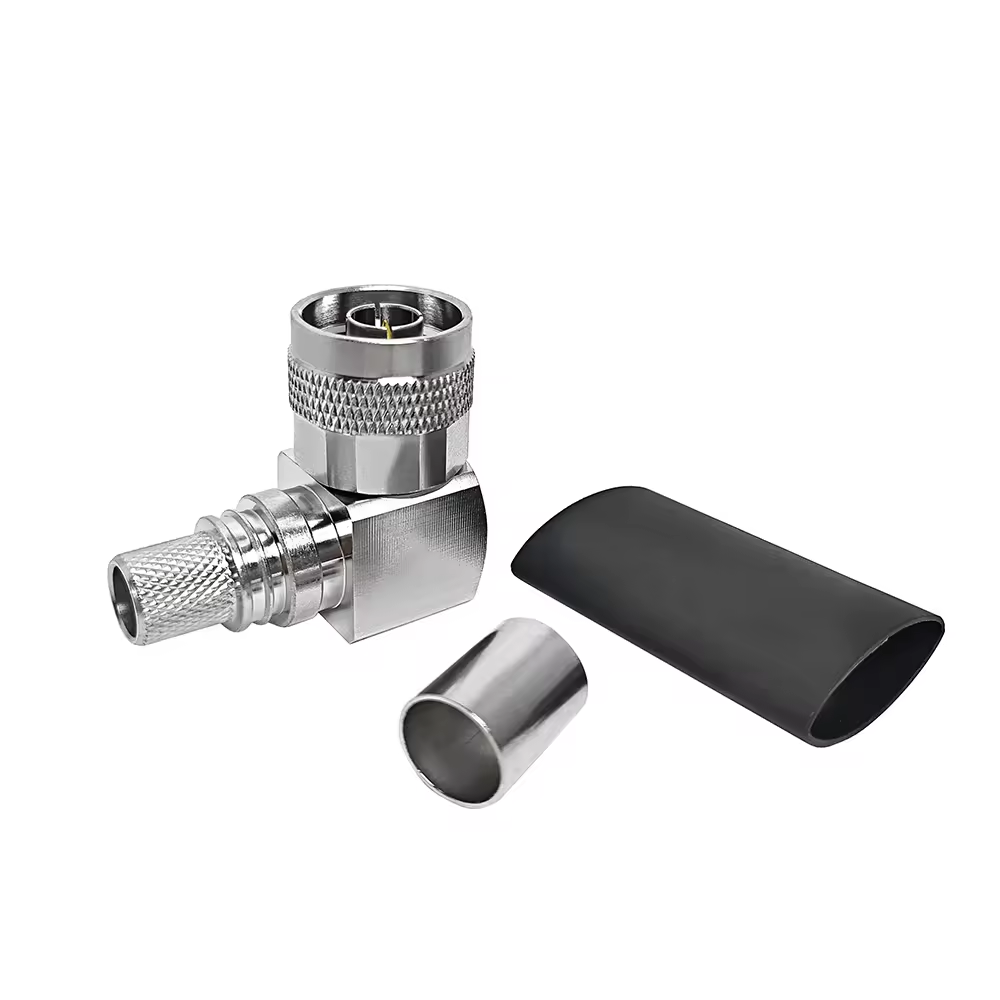
Right-angle TNC male connectors: Where panel access is limited, or where cable routing runs perpendicular to the connector axis, right-angle TNC male variants allow cable exit parallel to the mounting surface. These are commonly used in avionics bays, vehicle dashboards, and tightly packaged outdoor enclosures where the standard straight-body connector would impose a tight cable bend radius.
Where TNC Male Connectors Are Typically Specified
In my experience reviewing installation specs across several application areas, the environments where a TNC male connector becomes the required choice fall into a recognizable pattern:
- Aviation and military electronics: Airborne and ground-based military systems routinely specify TNC interfaces for RF signal routing because of the MIL-STD-202 vibration qualification and MIL-STD-348 interface standardization. Both commercial avionics and defense system integrators use TNC as a baseline connector type when signals extend beyond the BNC frequency ceiling or when the equipment will face structural vibration loads.
- Railway and rolling stock communications: Train-borne communication systems—GSM-R, TETRA, cab radio, and onboard telemetry—operate in continuous vibration environments with acceleration profiles that quickly degrade bayonet-locked connector interfaces. TNC connectors on vehicle-mounted antenna cables provide mechanical retention that does not require periodic inspection and re-seating.
- Outdoor fixed wireless and telecom infrastructure: Base station feeders, outdoor access points, and point-to-point microwave systems at frequencies above 4 GHz—where the BNC frequency ceiling is already crossed—use TNC interfaces alongside N-type and SMA depending on power level and cable size. The threaded coupling also reduces the risk of moisture ingress caused by vibration-induced micro-movement at the connector interface.
- Test and measurement at higher frequencies: Bench-top RF instruments operating through L-band and S-band often use TNC ports. For technicians who need to route signals between test equipment with different interface standards, the tnc male to sma female adapter is a routine part of the test cable kit.
Adapter Solutions: Working Across Connector Families
When you need to connect TNC-equipped equipment into a system with N-type, BNC, or SMA interfaces, the adapter path matters. Using a low-quality adapter can degrade the insertion loss and VSWR performance that the TNC interface was chosen to preserve in the first place.
A tnc male to sma female adapter lets you connect a TNC cable assembly into an SMA-port instrument or antenna without fabricating a new custom cable. These are practical in measurement setups and during system integration testing. For installations where an existing BNC cable assembly needs to interface with a TNC-port device, a BNC female to TNC male adapter provides an interim solution, though it will be limited to the BNC's 4 GHz ceiling. N-type to TNC adapters are used when high-power N-type feeder runs need to terminate at TNC-interface equipment, such as certain avionics transceivers and railway radio units.
For applications requiring the broadest frequency coverage and highest mechanical robustness from a TNC interface, a hermetically sealed stainless steel construction addresses both the internal contact protection and the external corrosion resistance requirements in a single connector design. Worldpeak's TNC-ULTRA Miniature TNC Connector, rated to 8 GHz with a stainless steel body and hermetic sealing per MIL-STD-348, is an example of a TNC male connector designed specifically for environments that combine high frequency, vibration, and humidity exposure.
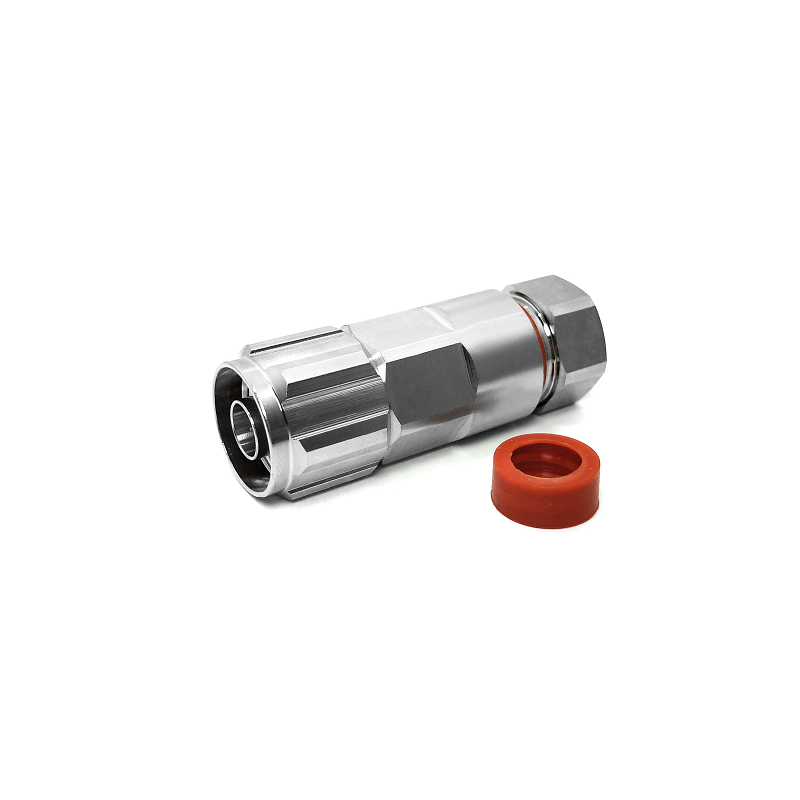
For infrastructure-side feeder runs that terminate at N-type ports before the adapter chain begins, Worldpeak also supplies the RFX-Custom-02 High-Power RF Connector (7/16 DIN Female to N Male, 0–3.5 GHz, rated at 3 kW), enabling a consolidated sourcing approach for both the high-power feeder interface and the downstream TNC male connector interface within the same system.
When the TNC Is and Is Not the Right Choice
To put this in practical terms: if the installation operates below 4 GHz, will not be exposed to continuous mechanical vibration, and there is no regulatory or system-level standard requiring TNC, then a BNC is likely sufficient and easier to work with in the field. The threaded coupling that makes TNC valuable in mobile and high-frequency applications is also slower to mate and less convenient in rapid-connect scenarios like broadcast patching or lab test setups.
If the signal exceeds 4 GHz, if the connector will be exposed to sustained vibration from vehicle or machinery operation, if the application standard specifies MIL-STD-348 interfaces, or if the system uses a regulatory RP-TNC port, then specifying a TNC male connector is not over-engineering—it is the accurate specification for the job.
For multi-interface installations where you need TNC alongside N-type, SMA, and other connector families from a single supplier with full test traceability and technical pre-sales support, sourcing from a manufacturer like Worldpeak, which covers the full DC-to-18 GHz range across all major RF interface families, reduces the specification risk across the bill of materials.