EN
EN

worldpeak-rg303-50-ohm-coaxial-cable-engineering-data--selection-guide, worldpeak-rg303-50-ohm-coaxial-cable-engineering-data--selection-guide, /rg-coaxial-cable
EN
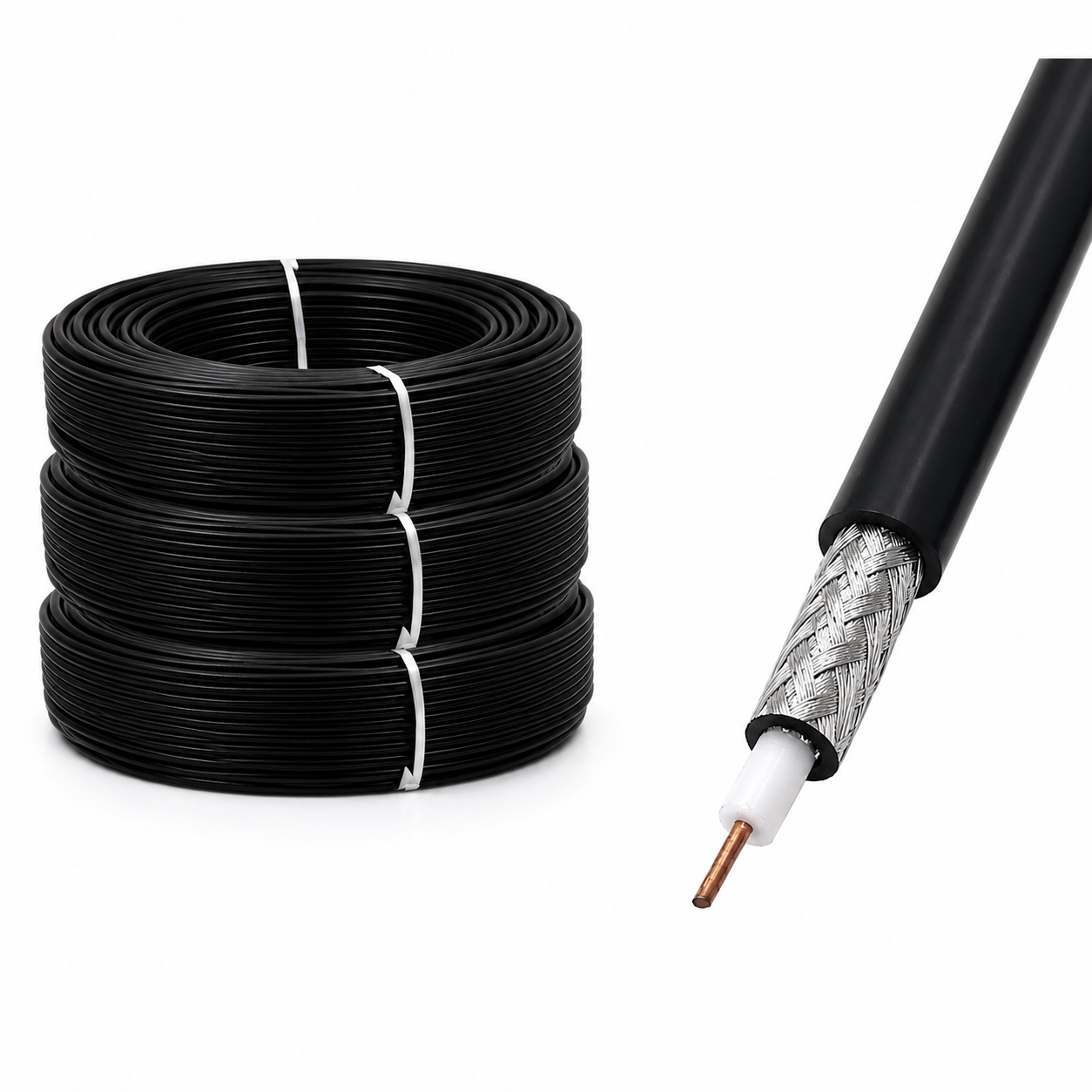
High-Isolation Double-Shielded 50-Ohm RG303 Coaxial Cable with Premium PTFE Dielectric and Chemical-Resistant FEP Jacket for High-Temperature Aerospace, Military, and Precision Test Applications
The Worldpeak RG303 50-Ohm Coaxial Cable is a premium high-temperature coaxial cable engineered by Zhenjiang Worldpeak Communication Co., Ltd. to deliver exceptional signal integrity in extreme environments. Combining the thermal resilience of a PTFE dielectric with a double-shielded RF cable architecture, this compact 4.3 mm PTFE coaxial cable bridges the gap between miniature assemblies and heavier transmission lines. Designed for demanding aerospace, military, and industrial testing environments, this double-shielded RF cable provides greater than 90 dB of electromagnetic isolation. It operates reliably across a wide thermal spectrum from -55°C to +200°C, making it the premier high-isolation option for high-density systems.
The Worldpeak RG303 50-Ohm Coaxial Cable is an advanced, flexible high-temperature RF cable built to withstand extreme thermal, mechanical, and electromagnetic stress. When standard polyethylene-jacketed cables deform or fail under intense heat, this specialized PTFE coaxial cable maintains its structural and electrical integrity. Zhenjiang Worldpeak Communication Co., Ltd. manufactures the RG303 coaxial cable using high-grade materials to ensure stable attenuation and impedance matching over long operational lifespans.
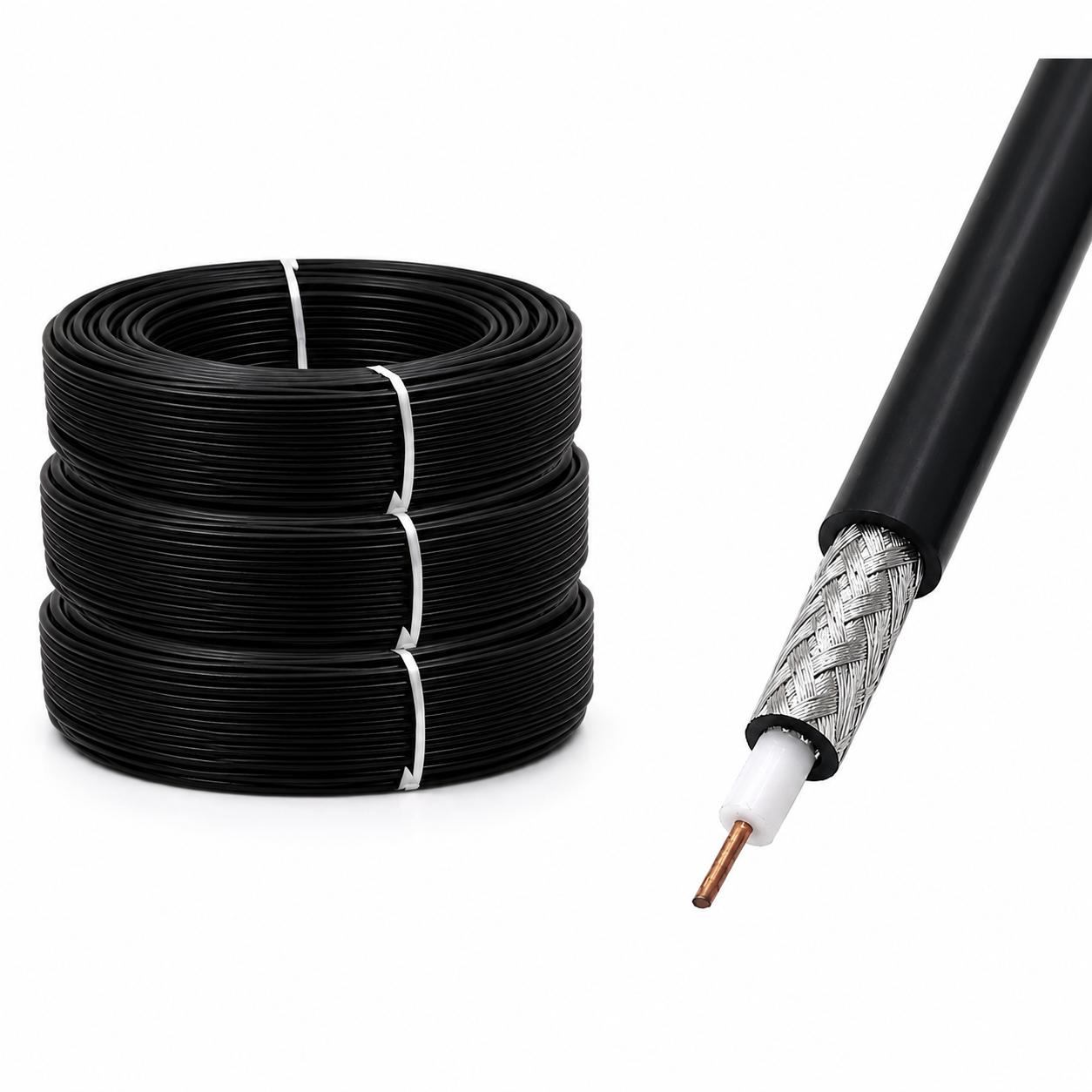
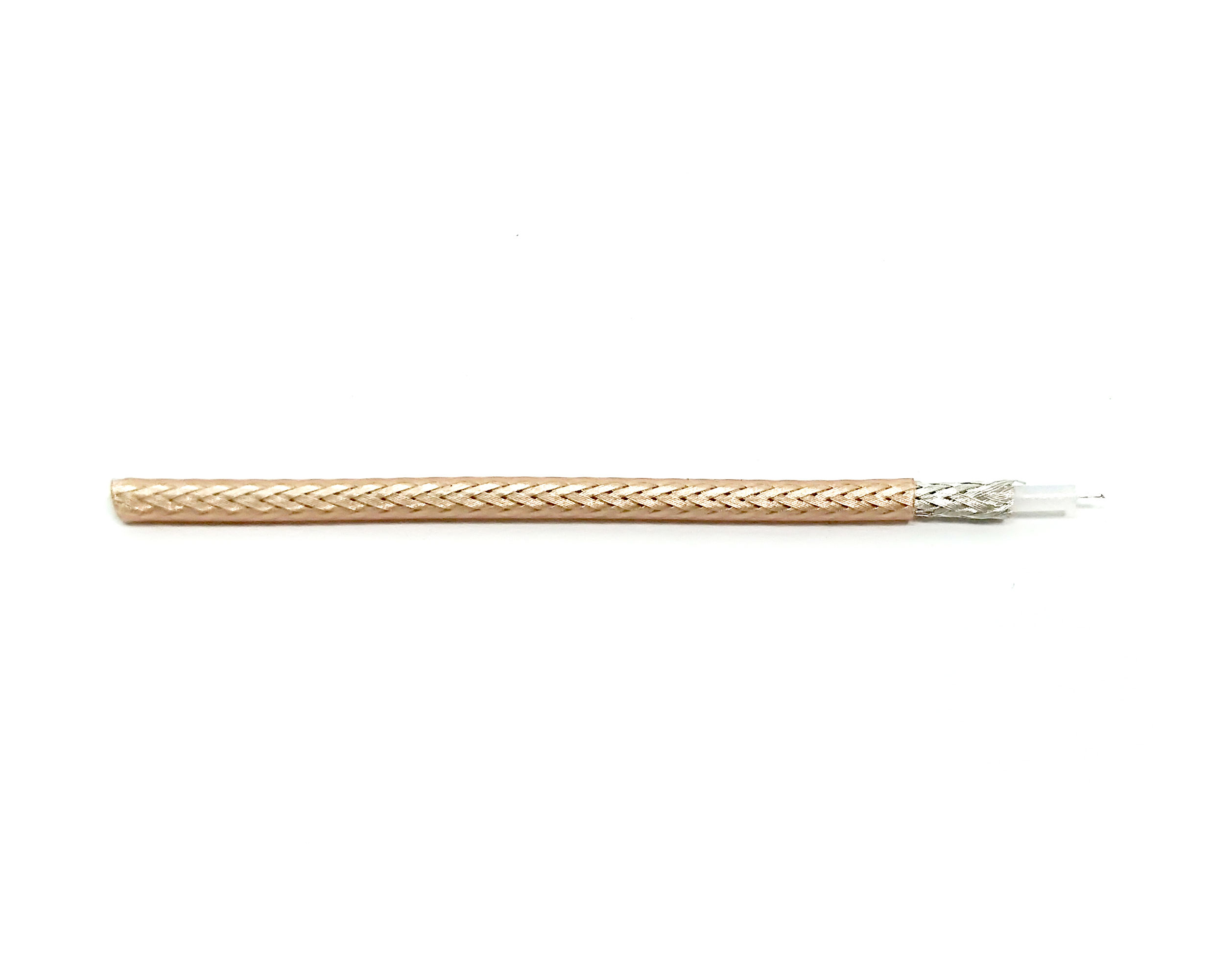
At the core of this 50-ohm coaxial cable is a 0.94 mm solid silver-plated copper-clad steel (SPCCS) inner conductor. This center conductor is insulated by a 2.95 mm extruded polytetrafluoroethylene (PTFE) dielectric. The solid PTFE core provides excellent dielectric strength and outstanding thermal stability. Surrounding the dielectric is a dual-layer silver-plated copper braid cable shielding system. This dual-layer shielding delivers over 90 dB of shielding effectiveness, protecting weak signals from external RF interference. The entire construction of this double-shielded RF cable is sealed within a highly durable, chemical-resistant, and flame-retardant 4.32 mm fluorinated ethylene propylene (FEP) outer jacket. This FEP jacketed coaxial cable resists solvents, oils, and environmental weathering, ensuring excellent durability in harsh deployment locations.
Extreme Temperature Rating: This high-temperature coaxial cable operates continuously from -55°C to +200°C, making it ideal for military engine bays, aerospace compartments, and industrial ovens.
Double-Shielded RF Cable Architecture: Dual layers of silver-plated copper braid cable provide greater than 90 dB of EMI isolation, outperforming single-shielded RF cables in congested signal environments.
High-Purity PTFE Dielectric: The extruded PTFE core delivers low signal loss, stable capacitance, and high voltage resistance.
Robust FEP Outer Jacket: The high-performance FEP jacketed coaxial cable offers exceptional resistance to chemical exposure, UV light, fuel contact, and flame propagation.
Compact Form Factor: With a nominal outer diameter of 4.32 mm, this flexible high-temperature RF cable fits easily into tight routing spaces where larger cables like the RG142 cannot be installed.
| Parameter | Specification (Level A/B)* | Engineering Tolerance & Details |
| Inner Conductor | 0.94 mm Solid SPCCS (±0.02) | Level A - Solid Silver-Plated Copper-Clad Steel |
| Dielectric | 2.95 mm Extruded PTFE (±0.05) | Level A - High-temperature performance |
| Inner Shield | Silver-Plated Copper Braid (>=95%) | Level A - High-density primary shield layer |
| Outer Shield | Silver-Plated Copper Braid (>=90%) | Level A - Secondary high-isolation shield layer |
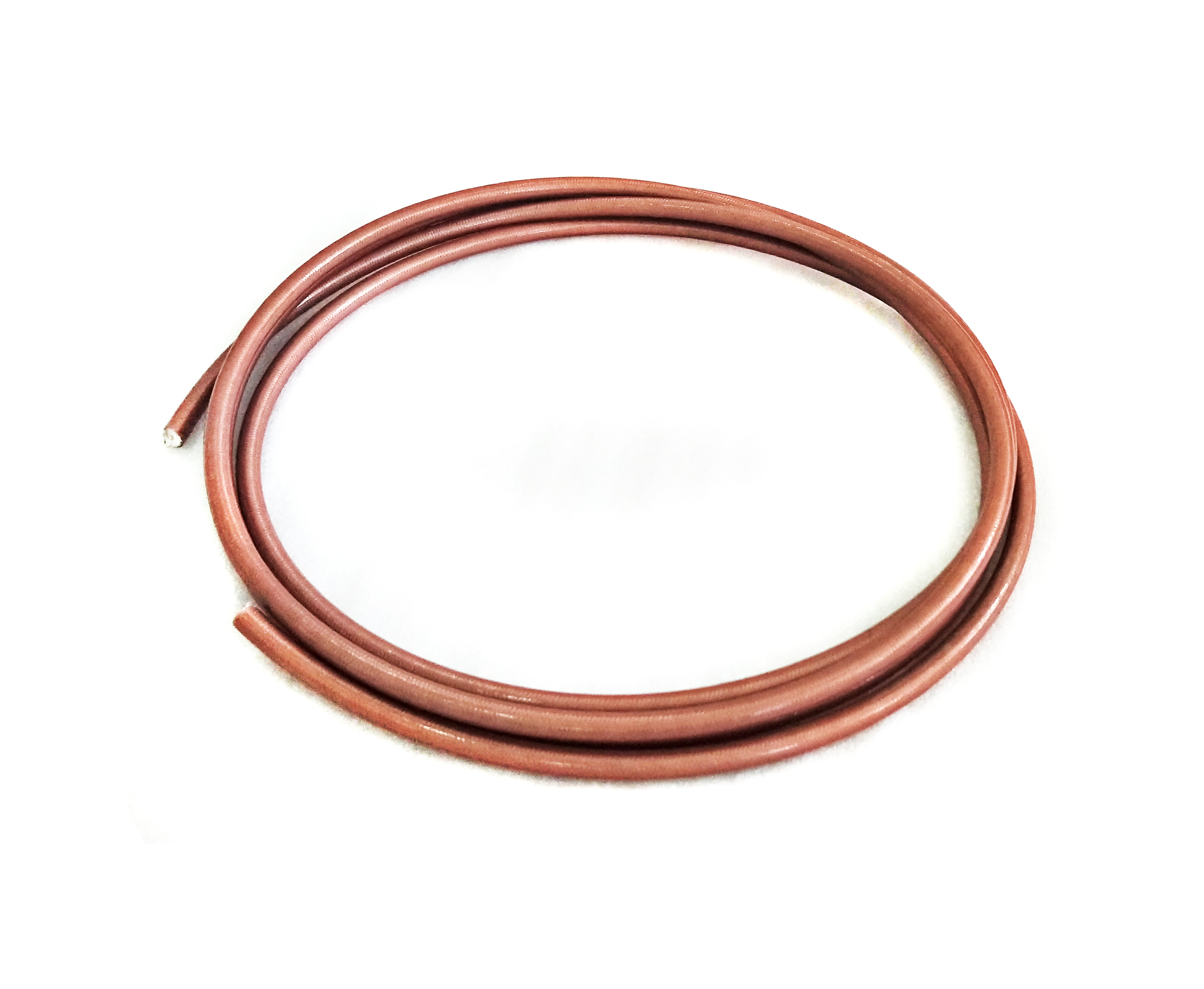
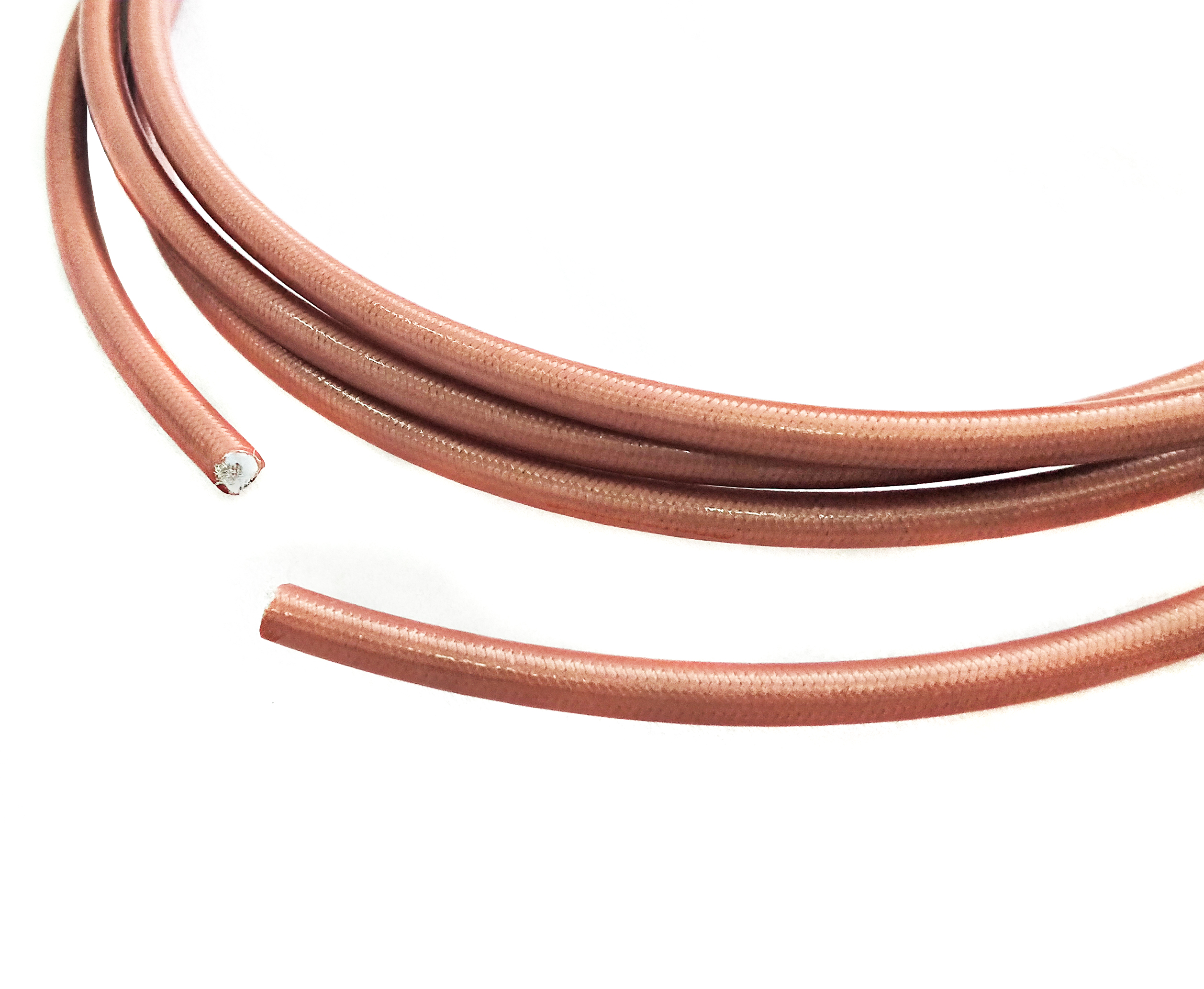
| Outer Jacket | 4.32 mm Extruded FEP (±0.10) | Level A - Translucent natural FEP jacketed coaxial cable |
| Impedance | 50 ± 2 Ohm | Level A - Controlled 50-ohm coaxial cable standard |
| Shielding Effectiveness | >90 dB (Typical) | Level B - Superior double-shielded RF cable performance |
| Velocity of Propagation | 70% (Typical) | Level B - Highly efficient signal velocity |
| Nominal Capacitance | 95 pF/m | Level B - Stable low-loss capacitive performance |
| Operating Temperature | -55°C to +200°C | Level B - Full industrial and military thermal range |
| Certifications | CE, RoHS, FCC, UL94, ISO9001 | Level A - Fully factory-certified manufacturing |
*Level A: Factory Verified; Level B: Typical Industry Value.
To deliver the high-performance levels expected of the RG303 coaxial cable, Zhenjiang Worldpeak Communication Co., Ltd. implements precise manufacturing techniques.
First, the extrusion of the 2.95 mm PTFE dielectric requires absolute control over the post-extrusion sintering cycle. Inconsistent sintering creates density variations along the length of the cable, resulting in periodic impedance deviations. Zhenjiang Worldpeak Communication Co., Ltd. utilizes multi-zone temperature-profiled sintering ovens to guarantee uniform crystallinity. This process limits impedance variation to less than 1 ohm, eliminating signal reflections.
Second, the dual silver-plated copper braid cable shields are woven with opposing lay angles. This mesh-over-mesh design minimizes electromagnetic window openings, suppressing high-frequency signal leakage. Third, tight quality control over silver plating adhesion prevents silver flaking during high-speed braid application. This ensures consistent shielding coverage and minimizes inter-layer resistance.
Avionics Engine Bay Harnesses: Used for engine compartment wiring where temperatures exceed 100°C and standard polyethylene cables melt.
LEO/MEO Satellite Subsystems: Deployed in low Earth orbit spacecraft payload wiring where outgassing restrictions rule out PVC, and extreme thermal cycling demands a highly stable PTFE coaxial cable.
Military Vehicle Communication Systems: Provides secure signal distribution inside armored vehicle electronics bays where dense multi-transmitter layouts require a high-isolation double-shielded RF cable.
Environmental Chamber Testing Assemblies: Provides reliable instrumentation links inside test chambers subjected to rapid, extreme temperature transitions.
For B2B distributors, military defense contractors, and system integrators, purchasing from Zhenjiang Worldpeak Communication Co., Ltd. ensures exceptional product consistency. Every shipment of this high-temperature coaxial cable includes complete Certificates of Conformance (CoC), assuring strict adherence to CE, RoHS, FCC, and UL94 flammability standards.
Zhenjiang Worldpeak Communication Co., Ltd. provides comprehensive OEM customization, including custom FEP jacket printing and specialized shipping on heavy-duty spools. Additionally, factory-terminated jumper assemblies utilizing SMA, N-type, or TNC connectors with dual-shield crimp ferrules are available to help clients optimize their assembly processes and guarantee system shielding performance.
Q: Can the RG303 coaxial cable directly replace an RG142 cable in current system designs?
A: Yes, both function as double-shielded, 50-ohm, high-temperature coaxial cable options. However, because the RG303 coaxial cable features a smaller 4.32 mm outer diameter than the 5.0 mm outer diameter of the RG142, connector ferrules designed for RG142 cannot be used. Specific connectors sized for the 4.32 mm FEP jacketed coaxial cable are required.
Q: Does silver tarnish on the silver-plated copper braid cable affect signal performance?
A: No, silver sulfide tarnish is electrically conductive and does not degrade the high-isolation capabilities of this PTFE coaxial cable. However, to prevent increased crimp resistance at the connector interfaces, Zhenjiang Worldpeak Communication Co., Ltd. recommends terminating bulk cables within 12 months of manufacture or utilizing nitrogen-purged packaging for long-term storage.
Q: What installation precautions should be taken with a solid-conductor PTFE coaxial cable?
A: The solid SPCCS center conductor of this 50-ohm coaxial cable is prone to work hardening. It should be bent and routed securely during the initial installation phase and not subjected to repeated, continuous mechanical flexing.